Interview with travel photographer Alex Kittoe
“The art of not planning the moment”
From journey to work of art
In this interview, he talks about the importance of not forcing one’s own style but allowing it to develop naturally; why gaining as much experience as possible – especially in the beginning – is essential; and why attitude, curiosity, and perseverance are often more important than technique.
Alex Kittoe talks about travel photography and his sources of inspiration
How did you get into photography?
I picked up a camera for the first time in 2017—a Sony A6000 from a starter kit that I bought before a semester abroad in Alicante, Spain. Back then, I had no intention of taking photography seriously. I just wanted something better than my phone to capture the trip. I was staying with a host family, and the camera quickly became a good excuse to go out and explore the area. I walked or jogged around the city a lot and photographed everything that caught my eye.
I was immediately fascinated by the fact that photography allows you to capture moments—that you can, in a sense, freeze a moment in time and preserve it forever. Back at the University of Denver, I won a small university contest with a photo of the Cliffs of Moher in Ireland. The photo was printed and exhibited in a small gallery. When I saw my print there, it sparked something in me. From that point on, I was determined to keep going.
That moment drew me deeper into photography. I photographed everything that came my way: I smuggled my camera into concerts, took portraits of friends, worked for restaurants—and simply said yes to anything that gave me practice.
A lot changed in 2019 when I bought my first film camera. Film forced me to work more slowly, to really understand exposure, and to photograph more consciously. From then on, it became almost obsessive. I watched countless tutorials, experimented with image editing, and photographed constantly until everything slowly came together.
Three years ago, I quit my full-time job in the advertising industry—since then, I’ve been working as a freelance photographer.
Where do you get your inspiration—and what inspires you the most?
I draw inspiration from many things, but travel is by far the biggest driving force for me. I feel most alive when I’m out and about with my camera in a new, unfamiliar environment. Long before I started taking photos, I had this strong urge to see as much of the world as possible. I grew up in Kansas City, looking at pictures of faraway places, hearing stories—and wanting to experience it all for myself someday.
This wanderlust remains at the core of my work to this day. I don’t try to be the “best photographer in the world.” Rather, I’m focused on living an interesting life—and capturing it from my own, honest perspective.
That’s why my portfolio isn’t just a collection of beautiful images. It’s the story of my life, my experiences, and the things that intuitively draw me in.
A cinematic look and emotional depth: How do you create this visual atmosphere?
That comes mainly from years of experimenting with color effects and exposure. I often overexpose my images slightly—whether shooting digitally or on film. This creates a bright, almost pastel-like base right from the moment I take the photo.
During post-processing, I always ask myself: How did that moment feel? Was it warm and dreamy, or rather cool and melancholic? That feeling sets the direction.
I often start by reducing the saturation in my photos a bit and then carefully bring it back by adjusting individual colors until everything feels harmonious. I hardly ever use presets—I edit almost every photo from scratch. This allows me to develop each subject individually while constantly improving my own skills.
I want my images to have a certain dreamlike quality, yet still appear real. When that balance is right, I know I’ve created a good image.

Photo: Alex Kittoe | The motif opens up into a quiet, light-filled expanse. The Hamburg frame with a wide passe-partout gives it room to shine, while walnut wood gently echoes the natural tones.
More information about photos in wooden frames
Your photos capture peaceful moments. What criteria do you use to capture everyday life?
For me, the best thing about photography is that I’m completely present in the moment. It’s less about consciously deciding what’s “photo-worthy”—I tend to react intuitively.
When I’m taking photos, everything slows down. I notice details much more consciously and fully immerse myself in the moment. Often, I just press the shutter intuitively, without thinking too much about it. Sometimes, when I look through the photos later, I don’t even remember pressing the shutter.
The best way to describe it is this: When I’m taking photos, I switch into a kind of autopilot. This helps me avoid overthinking everything—and my photos remain honest and immediate.
Was there a moment while traveling when everything came together and your work paid off?
Last summer I was in Kenya and Tanzania—it was the best trip of my life. Most days were cloudy and rather gray, but that didn’t bother me at all. Just experiencing those landscapes and animals was incredible.
On my last day in the Masai Mara, I got up at 3:30 in the morning to find a lion family at sunrise. At first, the sky was completely overcast, and I thought it wasn’t going to happen.
But just as the sun rose, the clouds parted, and the light was suddenly incredible. At that moment, a lion cub emerged from the tall grass right next to us. We were able to get close to the group, and I captured some of my absolute dream shots from Africa.
It felt like pure luck—but also like a reward for sticking with it and being patient. Sometimes everything just falls into place, but I’ve learned never to count on it and always to make the best of what you get.
How do you find those special, authentic moments when traveling in nature and cities?
I try to travel with as few expectations as possible and let myself be surprised. I almost never have a specific image in my head that I absolutely want to capture—too much can change for that.
Instead, I go with the flow, set out without a fixed plan, and photograph whatever feels right. For me, that’s the best approach because I experience places so much more intensely and authentically, rather than just working through pre-planned “bucket list” shots.
That makes my work more organic. Many situations may not be photographically perfect, but they still remain with me as memories.
In the end, it’s just as much about the journey as it is about the pictures. My archive isn’t just a collection of photos—it’s, above all, a record of my life.

Photo: Alex Kittoe | Almost like looking through a window into another scene: Without a frame, the focus remains entirely on the image itself. Matte acrylic glass softens the colors and lends the subjects a serene depth, completely free of reflections.
More information about Photo Prints behind matte acrylic glass
What role do prints play, and how does printing change your perception of an image?
Prints play a huge role for me. Seeing an image in print completely changes my perception every single time.
I firmly believe that every photographer should print their work—at least some of it. When I saw one of my images as a print for the first time, I realized how seriously I wanted to take this whole endeavor.
A printed image is something completely different from an image on a screen—even though that’s mostly how we consume photography today. A print forces you to stop and really engage with it, instead of just scrolling past.
Today, printing is one of my biggest motivations. I currently have a major solo exhibition in Seoul featuring over 150 images, I’ve just published a book with Setanta Books, and I sell prints to collectors worldwide. Prints have completely changed my perspective on my own work—and they keep driving me forward.
What do you prioritize most when preparing prints? Paper, size, color?
The choice of paper makes a huge difference. After many tests, I’ve settled on a few options that I know bring out the best in my images.
Size and color also play an important role. For me, the ideal size is often around 40 × 60 centimeters—large enough to make out the details, but not so large that it dominates the room.
But working with the person who prints it is just as important. Eventually, I’d like to print it myself, but right now I work with a printer in Kansas City who knows my preferences inside and out. That trust and consistency give me the freedom to focus on other things.

Photo: Alex Kittoe | The image thrives on the contrast between the warm interior and the cool evening atmosphere outside. The black Aluminum ArtBox provides a clean border and lends the image a sense of spatial presence through its depth.
More information about the Aluminum ArtBox
What are the three most important lessons you would share with young photographers?
The first is quite simple: keep at it. Nobody owes you anything—you have to take the initiative and put yourself out there. Especially in the beginning, there were many setbacks, but I kept entering competitions, writing to galleries, and contacting potential clients. The more you do, the more opportunities you create for yourself.
The second: Say yes to as much as possible in the beginning. I took every job—assisting, events, concerts. Not all experiences were great, but they showed me what I really want to do—and what I don’t. That was extremely valuable for my journey.
And the third: Be a good person. Be friendly, reliable, and don’t let your ego get in the way. Relationships are incredibly important in this industry—and how you treat people always comes back to you.
Finally: Tell us a little bit about yourself.
My name is Alex Kittoe, I’m 28 years old, and I work as a photographer and collage artist. I’m from Kansas City, Missouri, where I now live again. I studied at the University of Denver, where I spent nearly ten years before moving back to my hometown.
I live there with my wife Caroline and our English Mastiff, Rowan. My wife works as a travel consultant, so we travel a lot together—this year I visited my 40th country, and there are many more to come.
In my work, I explore light, color, and atmosphere—often with a painterly, almost ethereal quality. In recent years, I’ve exhibited my work nationally and internationally, and I’m currently working on several new projects, including a collaboration with an exciting digital artist.
Besides photography, I love sports, fitness, and snowboarding—it keeps me active and gives me new energy for my creative work.
WhiteWall Product Recommendations


Alex Kittoe
Alex Kittoe is a photographer and collage artist from Kansas City, Missouri. His work explores light, color, and atmosphere, moving between a documentary perspective and artistic interpretation.
He has exhibited his work nationally and internationally, publishes Coffee Table Books, and is constantly working on new projects. Travel is a central element of his work and one of his most important sources of inspiration.

We’re Happy To Help
Stores Need assistance?Our team will help you select the perfect products!Discover Now
Customer Service Feel free to call us at +1 343 803 09 22 or send us an email at info@whitewall.com.Contact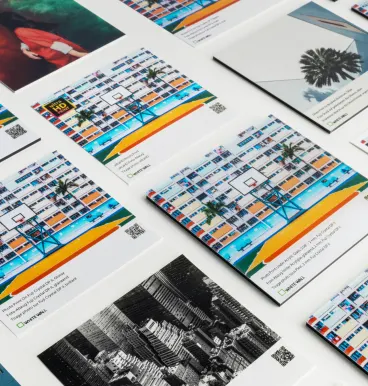
Product samples Our product samples will help you select the perfect print materials.Discover Now
