
Sublimation Printing: The Innovative Way to Create Expressive and Vibrant Images
By WhiteWall expert Jan-Ole Schmidt
Sublimation printing is a modern and highly precise process for transferring images onto a wide range of materials. The technology offers exceptional color depth, long durability, and razor-sharp results on surfaces ranging from ceramics, plastic, wood, and aluminum to textiles. But what exactly is behind this process and how is it used in detail? The technical basics of sublimation printing, as well as its advantages and special features, are explained below.
Basics of sublimation printing
Sublimation printing is a process that makes use of the physical process of sublimation. Sublimation describes the direct transition of a substance from a solid to a gaseous state without first passing through a liquid phase. This principle is used in the printing process to transfer dyes from a carrier directly onto the desired printing medium.
The process begins with a special printer that uses sublimation inks. These inks contain dyes that can be converted into a gaseous state by heat. The ink is first printed onto transfer paper, which is then applied to the desired printing medium, such as a coated metal plate, ceramic, or polyester fabric. The transfer paper is heated under high pressure and at temperatures of up to 230 degrees Celsius. This causes the ink to evaporate and permanently bond with the surface or coating of the printing medium.
The role of materials in sublimation printing
The choice of printing material is crucial for the result of sublimation printing. Not all surfaces are suitable for this process, as the dye in the gaseous phase requires a special coating or material structure to bond. Textiles that consist of at least 80 percent polyester or materials that have a polyester coating are particularly suitable. The latter applies, for example, to surfaces made of ceramic, metal, or plastic. These surfaces must be coated with polyester for sublimation printing.
A particularly popular application of sublimation printing is printing on textiles, especially polyester fabrics. The colors penetrate the fibers of the fabric and are not only applied to the surface, but are deeply embedded in the material. This has the advantage that the print image is not only particularly abrasion and color-fast, but also moisture-resistant. In addition, the special feel of the fabric is retained. This also applies, for example, to our high-quality WhiteWall photo canvas textile, where your motif is not printed on a classic canvas, but on a fine, woven fabric and stretched onto a stretcher frame.

The technical process of sublimation printing
Sublimation printing begins with the preparation of the image file, which is created or edited digitally. In the next step, this file is printed on transfer paper using a special printer that uses sublimation ink. It is important that the image is printed mirror-inverted so that it appears correctly when transferred to the medium.
The transfer paper is then placed on the print medium, taking care to position it precisely to achieve a clean result. When printing on mugs, the transfer paper is attached to the mug. The transfer paper is pressed onto the surface under high pressure and heat. The temperature of up to 230 degrees Celsius ensures that the ink on the paper evaporates and penetrates directly into the textile medium or polyester layer. Depending on the size and material of the printing medium, this process usually takes only a few minutes.
After printing, the transfer paper is removed and the image is now permanently fixed to the surface of the medium. Since the ink penetrates the polyester fabric of textiles and does not just lie on the surface, the print result is resistant to external influences such as scratches or moisture.
Advantages of sublimation printing
Sublimation printing offers a number of advantages over other printing processes. One of the biggest advantages is the color brilliance. The colors appear particularly bright and vivid. Since the dyes penetrate the material in gaseous form, very fine color transitions and a high level of detail are achieved.
Another advantage is the high surface stability of the prints. Because the inks are bonded directly into the material’s coating, the prints are extremely scratch-resistant. At the same time, the surfaces—especially on textiles—remain flexible and retain a pleasant feel.
Sublimation printing can be used on many surfaces. Individual items and small print runs are also possible. With our high-quality WhiteWall ChromaLuxe HD Metal Prints, for example, the ink is vaporized by thermal sublimation into the special coating of a 1 mm thin aluminum carrier from the ChromaLuxe brand.

Challenges and limitations of sublimation printing
Despite its many advantages, sublimation printing also presents a number of challenges. The biggest limitation is the choice of material. Since the process requires a polyester coating or similar structure, not all surfaces can be printed on. Pure cotton textiles or uncoated materials are not suitable for this printing process. Although sublimation printing directly onto cotton fabric is possible, it requires special printing inks.
Sublimation printing also requires special equipment. In addition to sublimation printers that work with specially developed inks, transfer presses are necessary to achieve the print at high temperatures and high pressure. This makes the process less accessible for home use or for smaller businesses that do not have special equipment.
The cost of the necessary equipment and consumables is generally higher than for conventional printing processes. However, the durability and quality of the prints justify this investment, especially in professional fields such as photography or textile printing.
Sublimation printing in practice: areas of application and possible uses
Sublimation printing is used in numerous industries and areas of application. In photography, this technique is used to transfer high-quality images onto materials such as aluminum or polyester fabrics. The images produced in this way are characterized by high color brilliance and durability, which is why they are particularly valued in art and advertising photography.
Conclusion:
If you're looking for a printing method that offers vibrant colors, high durability, and versatility, sublimation printing is an excellent choice. This technique allows images and designs to be transferred to a wide variety of materials in the highest quality, while the surface remains highly resistant to everyday wear and tear.
Despite the limitations in terms of material selection and the special equipment required, sublimation printing impresses with its outstanding results, which are used in the photography sector as well as in the textile and advertising industries. The innovative technology of sublimation printing is not only a technological advance, but also offers artistic and creative possibilities that cannot be achieved with conventional printing processes.
If you are looking for durable photo products that can also be used in bathrooms and other damp rooms due to their material properties, we recommend our ChromaLuxe HD Metal Prints as well as WhiteWall photo prints on aluminum Dibond, which are produced using UV printing.
Learn more about the author
Jan-Ole Schmidt (better known simply as Ole) is from northern Germany and has been with WhiteWall for many years. As a team leader in product management, he brings extensive experience in the photography industry. He taught himself photography and has built up in-depth expertise in image production, papers, laminations, and framing.
His strength lies in the combination of technical expertise and customer perspective - from file upload to framing in the WhiteWall configurator. Ole has held workshops, been a guest on podcasts and is in close contact with the photography community. He lives, works and photographs in Cologne.

WhiteWall Product Recommendations


Also interesting:
Submitted by WhiteWall expert Jan-Ole Schmidt
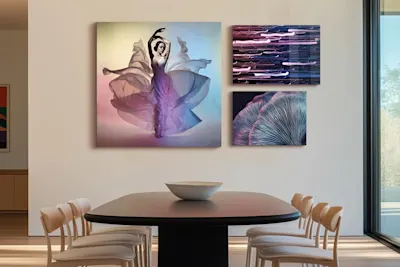
Laminating photos: High-quality protection and an aesthetic finish
Lamination on backing materials such as aluminum Dibond stabilizes images and protects them from UV light and moisture. The process enables a modern, frameless presentation with an impressive depth effect. Learn more about finishing for a professional, gallery-quality finish.
Submitted by WhiteWall expert Jan-Ole Schmidt

Digital meets analog: Exposure on photo paper
The exposure process uses chemical methods to achieve outstanding color depth without halftone dots. Learn all about the technical steps from exposure to development. Tips on choosing the right paper surface will help you achieve the perfect image effect.
Submitted by WhiteWall expert Jan-Ole Schmidt

UV printing: State-of-the-art technology for precise and durable photo prints
UV printing delivers razor-sharp results thanks to its instant curing process. Learn more about the wide range of materials—from aluminum to wood—and how to make the most of this technique for durable direct prints.