Pet Photography
By WhiteWall expert Jan-Ole Schmidt
Create Lasting Memories: Tips and Tricks for Great Pet Photography
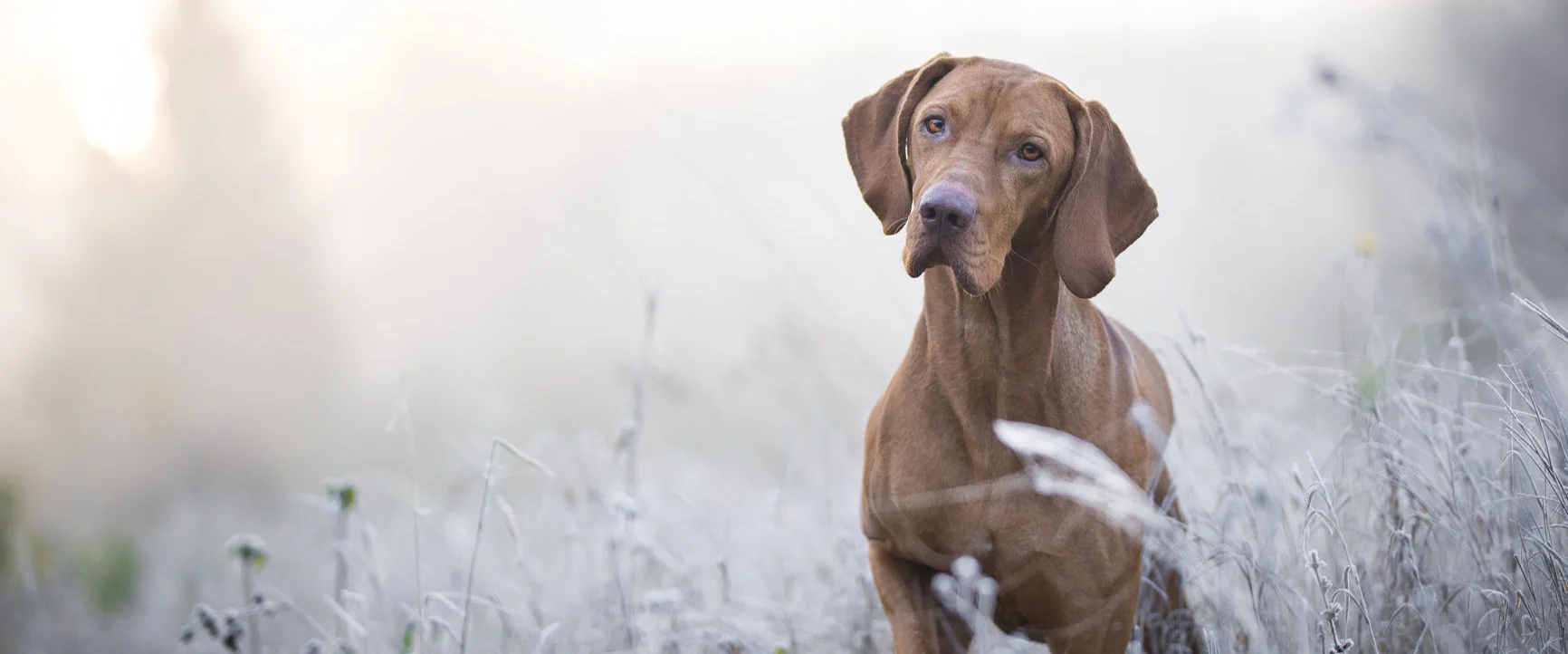
Pet photography is a popular genre. In fact, many aspiring photographers start their hobby by taking pictures of their children or pets. Our furry and feathered friends make wonderful subjects.
But capturing the personality and essence of animals in expressive images requires more than just a camera. In this article, we’d like to give you an introduction to pet photography and show you what equipment you’ll need, how to best showcase your animal friends, and what special considerations to keep in mind when photographing dogs, cats, and other pets.
The Right Equipment for Perfect Pet Photos
To get the most out of your pet photos, having the right equipment plays a crucial role. However, you don’t necessarily need to set up a professional studio—with the right camera, lenses, and accessories, even amateur photographers can achieve impressive results.
1. Cameras and Lenses for Pet Photography
The camera is the heart of photography, but a high-quality lens can also determine the success of a photo shoot. The following points should be considered when making your selection:
Camera: Essentially, it doesn’t matter whether you use a DSLR or a mirrorless camera—either type is suitable for pet photography. A modern mirrorless camera offers high image quality, flexible settings, and is usually faster than compact cameras or smartphones. Fast autofocus and, if necessary, (animal) eye autofocus are important, as pets rarely stay still and movements need to be captured quickly.
Lenses: As with many genres, it depends on the kind of photos you want to take. For animal portraits, for example, a fast lens with a focal length of 50 mm to 85 mm is recommended. But we’ll go into more detail on that later. Wide-angle lenses, on the other hand, are suitable for shots that include the animal’s surroundings, while a telephoto lens is advantageous when the animal needs to be photographed from a distance, for example in a park.
2. Lenses: Close-ups and dynamic scenes with the right lens
First, the big question: Which lens do you need for pet photography? There’s no one-size-fits-all answer. Basically, you can use wide-angle, standard, or telephoto lenses, depending on the type of photo you want to take.
The lens influences how your pet is framed. Depending on the type of animal and the shooting situation, different focal lengths and apertures are recommended:
Portrait lenses (50 mm – 85 mm) are excellent for close-ups of pets, as they offer a natural perspective and bring the animal into sharp focus in the foreground.
Wide-angle lenses (24 mm – 35 mm) are ideal for showing the pet in its surroundings, such as during a walk in the woods or in the garden.
Telephoto lenses (70 mm – 200 mm) are perfect for photographing shy animals from a distance or capturing dynamic action shots, such as a cat chasing through the garden.
3. Lighting: Natural Light vs. Artificial Light
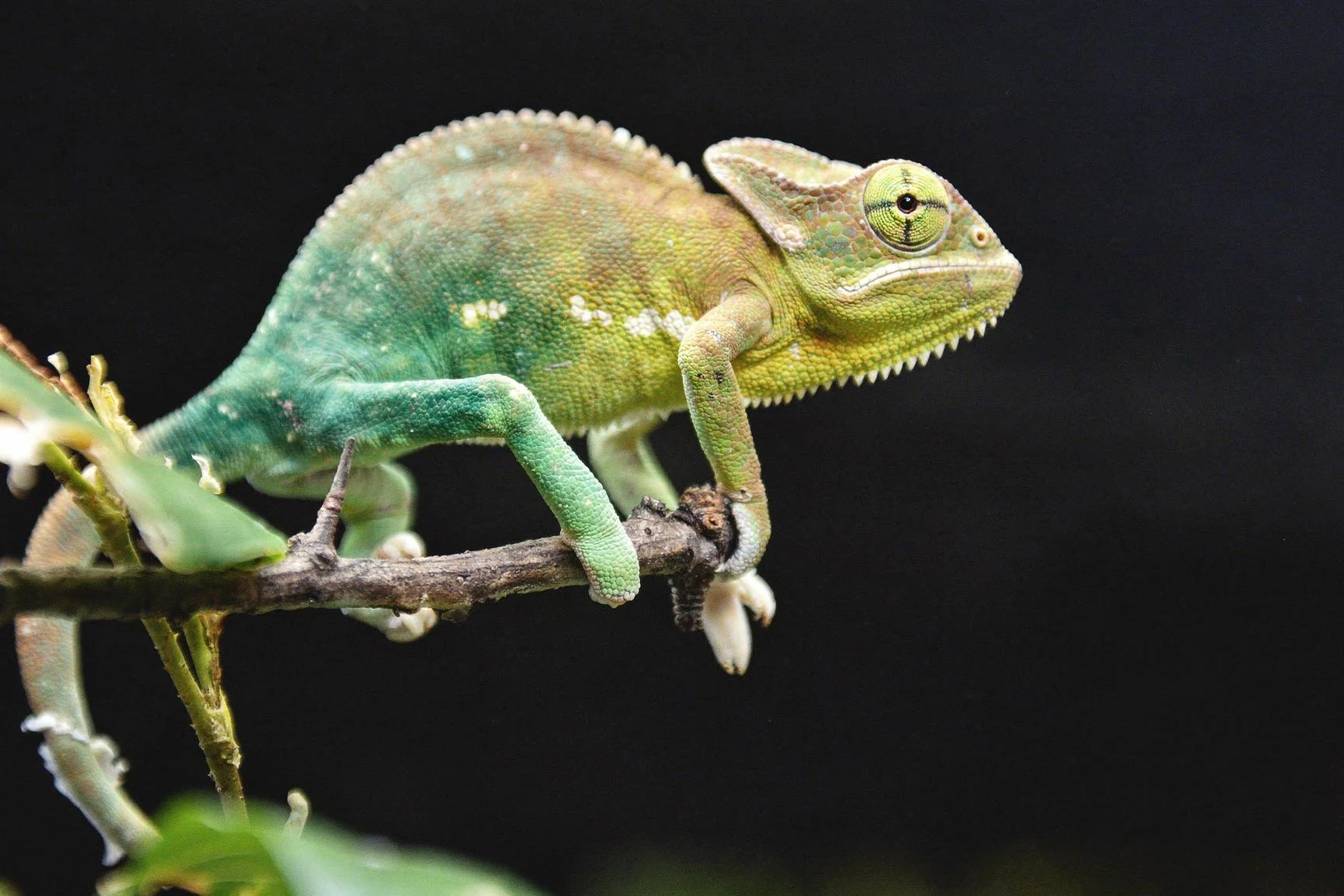
The right lighting is crucial for the mood of a photo. Natural light sources like windows or an overcast sky often provide softer, more even light that’s ideal for pet photos. Especially indoors, you can use diffused light coming from windows to gently illuminate the animal. For example, when photographing a cat by a window, the soft, natural light creates a warm and harmonious atmosphere that suits the calm nature of many cats.
If you opt for artificial lighting, you should use flash units or softboxes. Direct flash is too harsh and may startle the animal. Softboxes, on the other hand, diffuse the light and provide a more pleasant illumination.
Natural light: Whenever possible, shoot in daylight, preferably in the early morning or late afternoon when the light is softer and less harsh. Avoid direct midday sun, as it often casts strong shadows.
Artificial light: When shooting indoors, you can use softboxes or continuous light sources that emit an even, soft light.
4. Other useful tools
In addition to your camera and lighting, there are a few tools that can help you capture your pet’s attention and make your photos even better:
Reflectors: They help brighten shadows and add depth to the photo, especially in portraits.
Toys and treats: Treats or toys are very useful for keeping the animal’s attention or getting it into a specific pose.
Clickers: Some pet photographers make noises or use “clickers” that emit a clicking sound to, for example, attract the attention of dogs or cats so they look directly at the camera.
Camera Settings: How to Get the Most Out of Your Equipment
The right camera settings play a crucial role in perfectly capturing your animal’s energy and personality. With such a wide range of photographic possibilities—as you’ve already seen with the variety of focal lengths—these settings can vary greatly. Good preparation helps ensure you don’t miss spontaneous moments. Here are a few technical tips for capturing exciting animal photos.
1. Shutter Speed: Freezing Motion or Capturing Movement
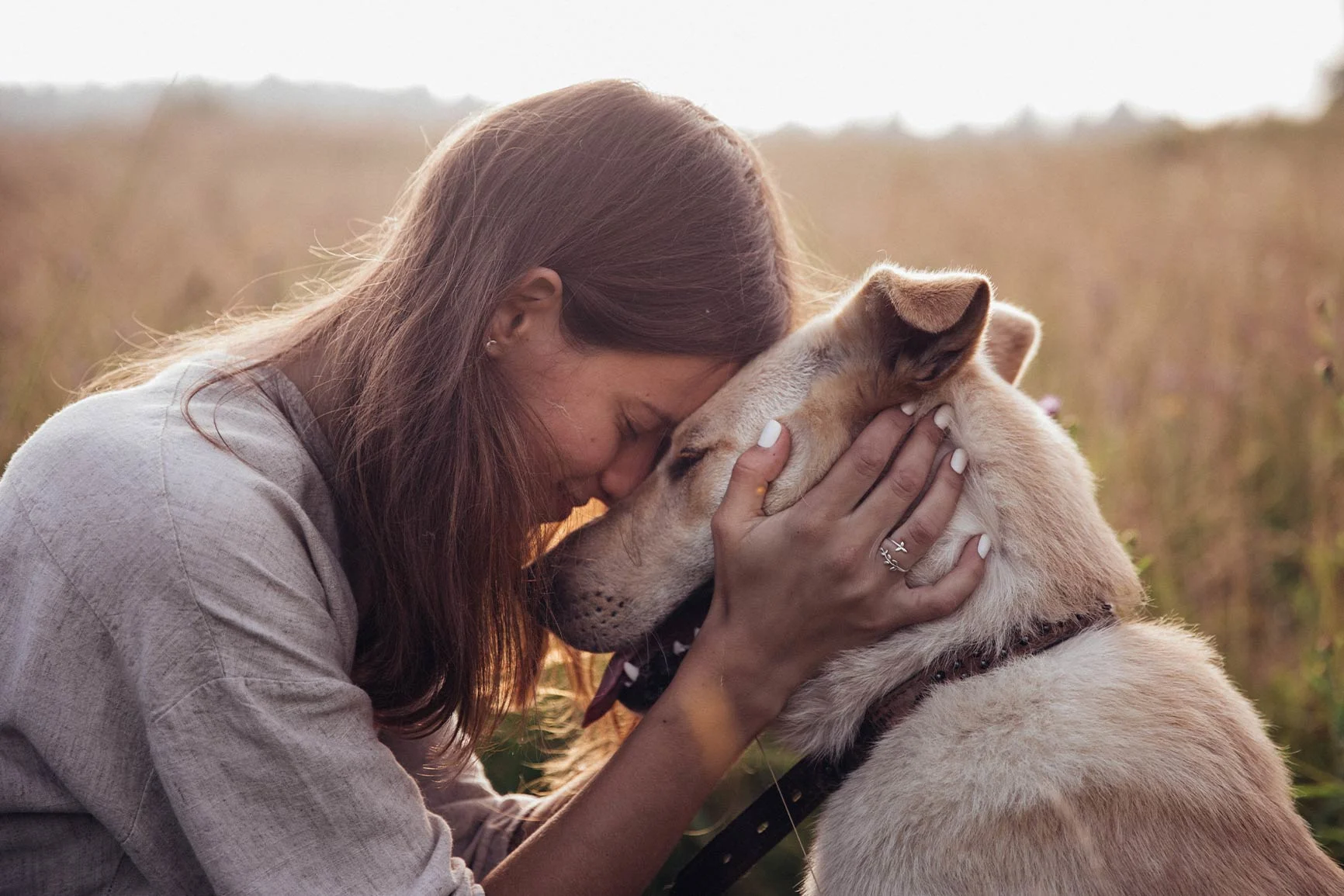
The shutter speed determines how long the camera sensor is exposed and how movement is captured. Animals are often in motion, which is why it’s important to adjust the shutter speed to the situation:
Fast movements (e.g., a running dog) require a fast shutter speed to keep the subject in focus. Use shutter speeds of at least 1/1000 second to avoid motion blur. To prevent the image from becoming too dark, you may need to increase the ISO value or adjust the exposure compensation (EV).
Still moments (e.g., a sleeping cat) can be photographed with a slower shutter speed. Here, 1/250 second or slower is sufficient.
2. Aperture: Using Depth of Field Strategically
The aperture controls how much light hits the sensor and how much the background blurs (known as bokeh in photography). In pet photography, it’s helpful to control the depth of field intentionally:
Wide aperture (f/1.8 to f/2.8): Ideal for portraits. The background becomes heavily blurred, and the animal stands out clearly. The focus should definitely be on the animal’s eyes.
Small aperture (f/8 to f/11): For shots where the surroundings or multiple animals should also be in focus, a smaller aperture is recommended. This provides greater depth of field and detail.
3. ISO Value: How to Avoid Image Noise
The ISO value determines the light sensitivity of the camera sensor. When taking photos of pets, you should keep the ISO value as low as possible to avoid image noise—especially in low-light situations:
Low ISO (ISO 100–400): In good lighting conditions or when shooting outdoors, you can keep the ISO low. This will give you clear, noise-free photos.
High ISO (ISO 800 and higher): If you’re shooting indoors or in low light and can’t improve the lighting, you’ll need to increase the ISO. Be careful not to let the image noise become too severe.
Working with Animals During a Photo Shoot: Patience and Empathy
One of the most challenging aspects of animal photography is that animals are not people—and certainly not professional models. Unlike humans, animals cannot simply follow complex instructions or pose on command. This requires knowing how to handle the animal properly, but above all, it demands love and patience.
1. Build Trust
Before the shoot begins, you should spend time with the animal to gain its trust. Especially with shy or fearful animals, it’s important to give them time to get used to the camera and the surroundings.
For example: A dog that initially reacts skeptically to the camera can gradually be calmed through positive reinforcement (e.g., treats or praise). This allows the shoot to proceed without stress.
It’s also always helpful to ask the pet owner for help. They are best able to interpret their pet’s behavior and can help create a calm and relaxed atmosphere for the animal.
2. Pay attention to body language
Animals communicate primarily through their body language. It is important to understand this in order to time the right moment for a photo or to recognize when the animal needs a break. Dogs, for example, show interest by wagging their tails or pricking up their ears, while cats may be stressed when their fur is ruffled or their eyes are wide open.
Example: A cat lying relaxed with its eyes half-closed signals that it feels comfortable. This is the ideal moment for a calm portrait.
3. Incorporate Play and Fun
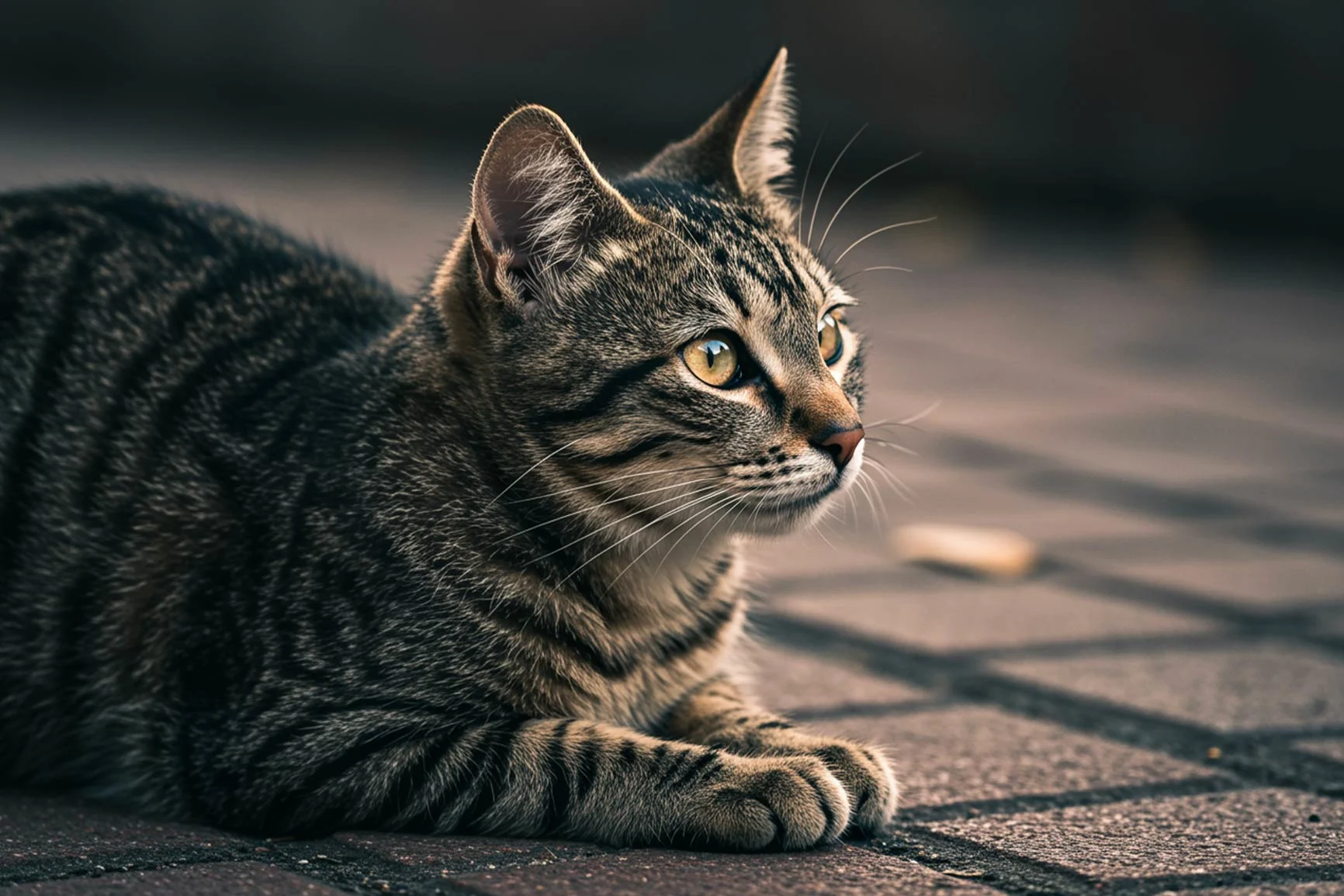
A photo shoot doesn’t have to consist solely of still poses. Especially active animals like dogs or birds love to move and play. These moments offer great opportunities for dynamic action shots. Example: Throw a dog its favorite ball and capture the moment when it jumps or carries the ball in its mouth. Such shots convey joy and energy.
4. Timing and Pauses: Catching the Right Moment
Like humans, animals have their active and quiet phases. Be sure to schedule the shoot at a time when the animal is either particularly active or relaxed—depending on the type of shot you want.
For active shots: Schedule the shoot for a time when the animal is usually awake and playful. For dogs, this is often after a walk; for cats, after a play session.
For calm shots: If you’re aiming for a relaxed portrait, wait until the animal has settled down—for example, after eating or after a break from playing.
Example: Cats are often particularly active in the morning and evening. Use these times to take dynamic shots, and plan portraits for the quieter midday hours.
5. The Right Location: At Home or Outdoors?
The location of the photo shoot significantly influences the animal’s mood. Pets often feel most comfortable in familiar surroundings.
At home: Your own backyard or living room offers the animal a sense of security and familiarity. Use rooms with plenty of natural light to capture natural, well-lit images.
Outdoors: A park or a meadow offers plenty of space for action shots and dynamic images. However, make sure the animal doesn’t get too distracted, and choose locations that are as deserted as possible.
Example: If you’re photographing your dog playing in a meadow, choose a spot with few distractions so the animal stays focused on you and isn’t distracted by other dogs or people.
Common Pets and How to Photograph Them
Every pet has its own unique characteristics that should be taken into account when photographing them. Below are tips for photographing the most popular pets:
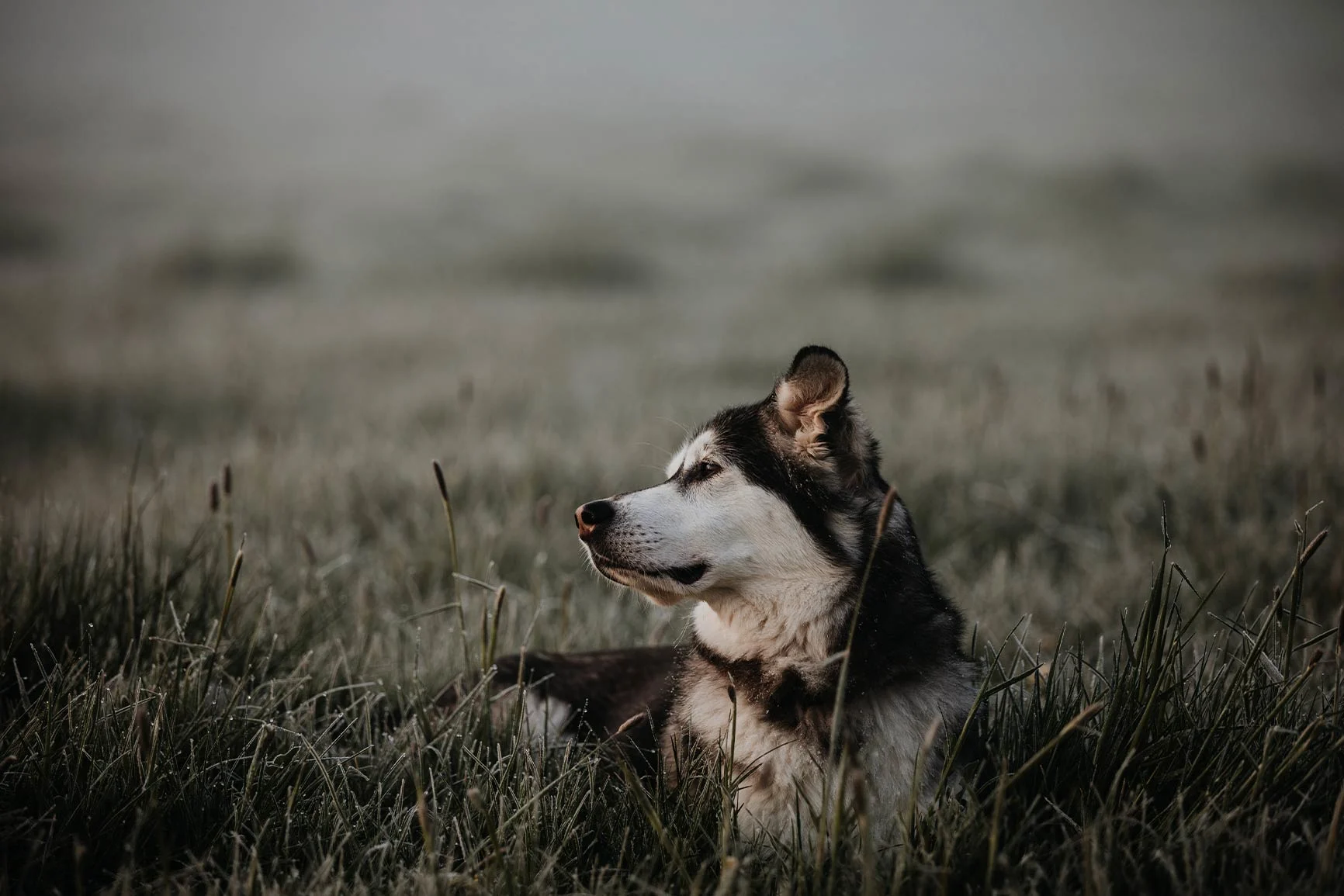
1. Photographing dogs
Dogs are generally curious and active animals, which makes them great subjects for photos. Since they love to play, dynamic shots that capture their energy work well.
Portrait photography: Here, the focus should be on the eyes, as they best reflect the dog’s expression and personality. A wide aperture (e.g., f/1.8 or f/2.8) creates an appealing background blur, making the dog stand out clearly in the foreground.
Action photography: Action shots of dogs are particularly impressive, but also challenging. Set a fast shutter speed (e.g., 1/1000 second) to freeze fast movements. Using continuous shooting mode, you can take several pictures in succession to capture the perfect moment.
Example: A dog running through a meadow or jumping into the water can be captured spectacularly if the camera offers a fast shutter speed and precise focus.
2. Photographing Cats
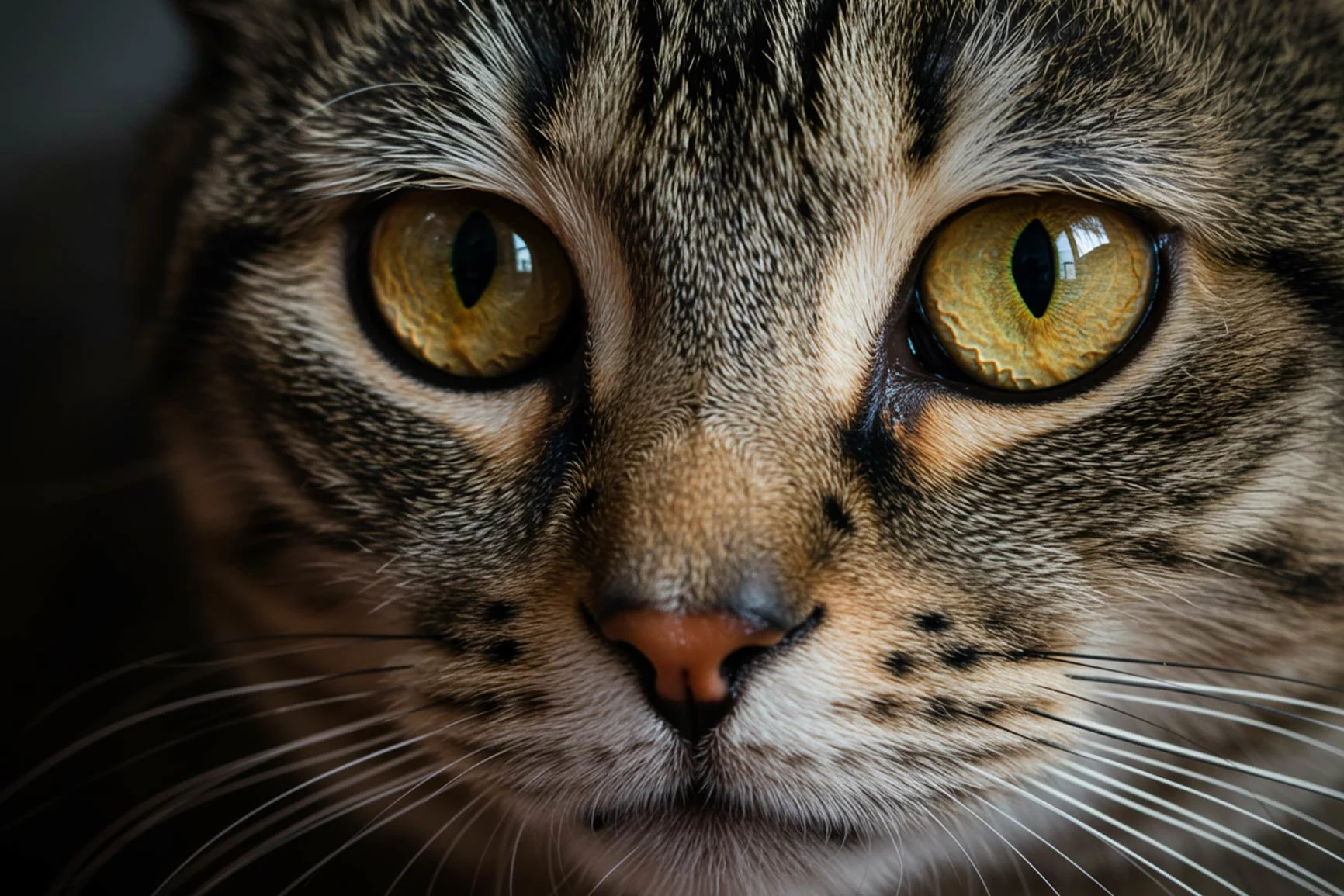
Cats are often independent and calm animals. They move gracefully and often appear very elegant—ideal for detailed close-ups. However, they can also be very impatient, which is why the photographer needs to react quickly.
Lighting and Perspective: Since cats like to climb to elevated spots, photos taken from a low angle can be striking. This gives the image a new dynamic and shows the cat in all its glory.
Quick Reactions: Since cats often move unexpectedly and suddenly, it’s important to always be ready. A camera’s continuous autofocus (AF-C) is particularly helpful here for keeping the focus on the animal, even when it’s moving.
Example: A cat jumping down from a piece of furniture offers a great opportunity to capture its agility and speed in a single shot.
3. Photographing Small Animals and Birds
Small pets such as hamsters, rabbits, or birds also offer numerous opportunities for expressive images. These animals are often very active or shy, which is why patient observation and a quiet environment pay off.
Close-ups and macro photography: Small animals are particularly well-suited for photography with macro lenses, which reveal even the finest details such as fur texture or feathers. Even, soft light—for example, through a window or a softbox—is ideal for bringing out such details.
Quiet environment: Small animals like hamsters or rabbits can easily be startled by noise or sudden movements. Create a quiet, relaxed atmosphere so as not to stress the animal.
Example: A rabbit nibbling on a blade of grass can look especially cute in a close-up if the focus is on its delicate whiskers and soft fur.
Printing Pet Photos
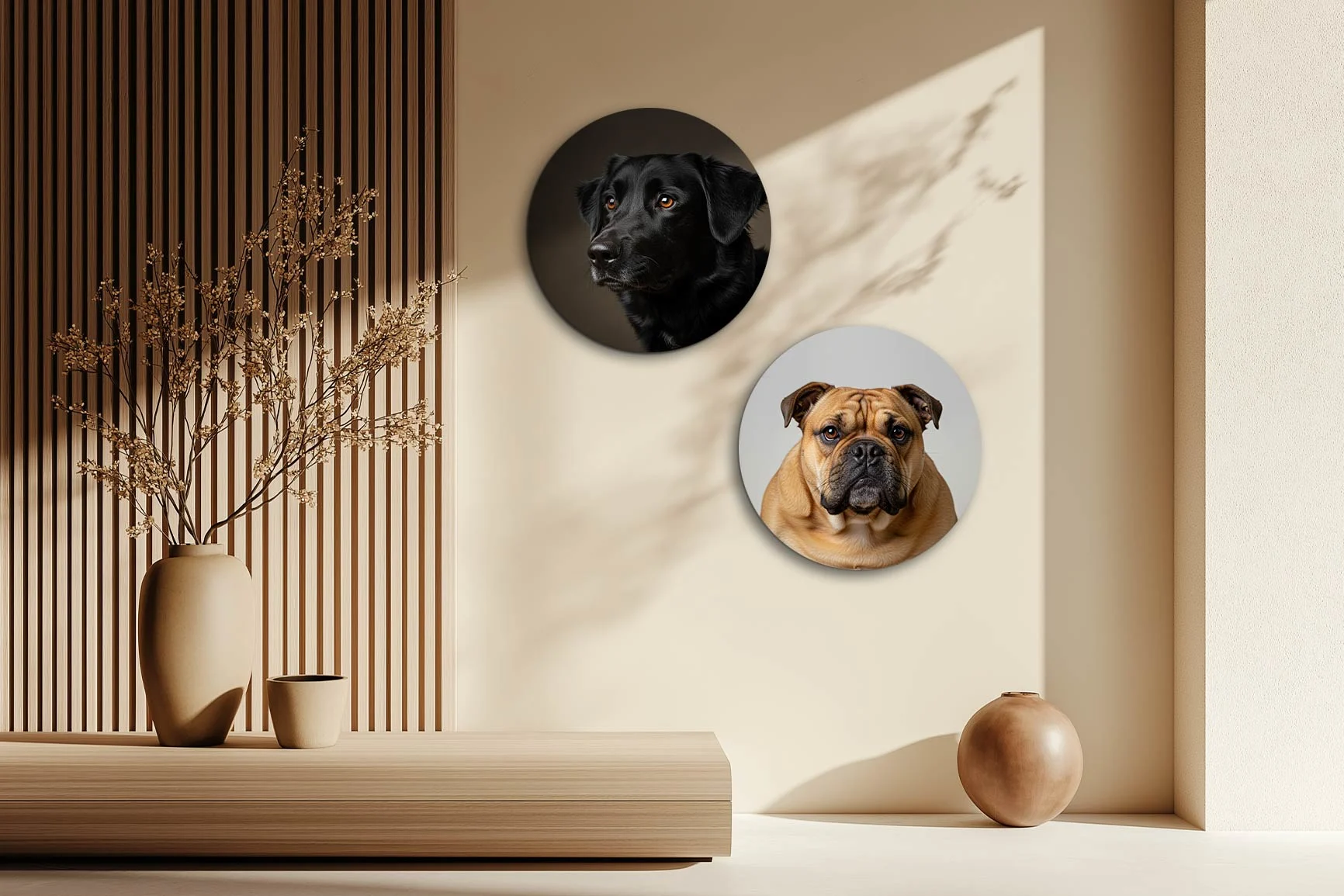
If you manage to take a good photo of your pet, don’t let it gather dust on your hard drive. One idea is to display your pets on canvas prints that decorate your hallway. Creative shapes like round prints are also great for pet photos—especially if they feature entertaining portraits of the animals.
Photo acrylic blocks are also popular; they can be used as paperweights in the office, for example. This allows you to personalize your work environment and keep your pet in view even while you’re working.
Conclusion: Pet Photography as a Creative Challenge
Pet photography is a wonderful way to capture the unique bond you share with your furry friend. With the right equipment, plenty of patience, and a good understanding of your pet’s behavior, you can create stunning images that will delight you and others. Use different perspectives, experiment with various lighting conditions, and let yourself be inspired by your pet’s natural movements and personality. This will result in authentic, emotional, and unique photos—lasting memories of your loyal companions.
Learn more about the author
Jan-Ole Schmidt (better known simply as Ole) is from northern Germany and has been with WhiteWall for many years. As a team leader in product management, he brings extensive experience in the photography industry. He taught himself photography and has built up in-depth expertise in image production, papers, laminations, and framing.
His strength lies in the combination of technical expertise and customer perspective - from file upload to framing in the WhiteWall configurator. Ole has held workshops, been a guest on podcasts and is in close contact with the photography community. He lives, works and photographs in Cologne.

WhiteWall Product Recommendations


We’re Happy To Help
Stores Need assistance?Our team will help you select the perfect products!Discover Now
Customer Service Feel free to call us at +44 20 34 11 18 46 or send us an email at info@whitewall.com.Digital appointment
Gift Certificates The Right Photo GiftDiscover Now
