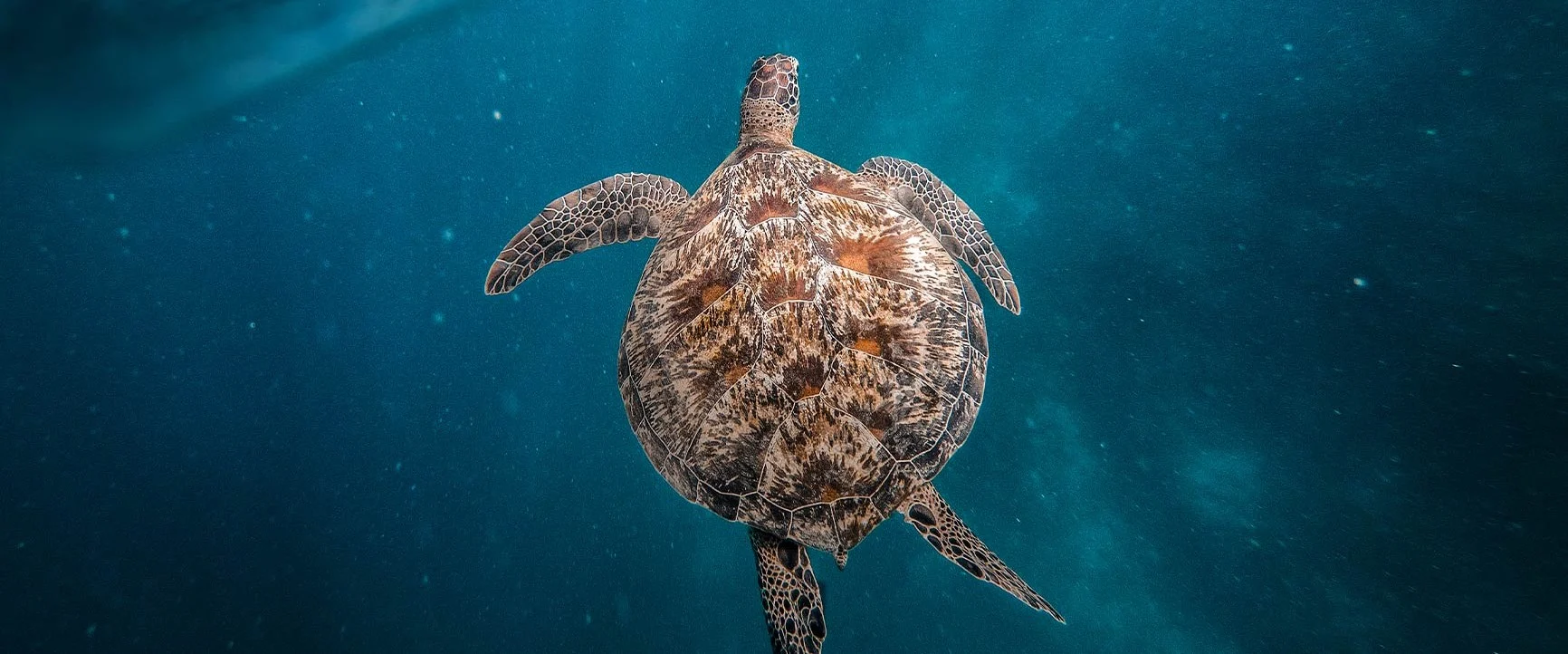
The fascinating world of underwater photography
By WhiteWall expert Jan-Ole Schmidt
The world of underwater photography holds exciting stories from the mysterious depths of the oceans. In this blog post, we offer tips on equipment, provide information on safety precautions and dive preparations, explain how to restore colors in underwater photos, discuss useful camera settings, and share valuable information for beginners.
What equipment do you need for underwater photography?
Camera
There are various ways to take photos underwater. Beginners and anyone who wants to first find out for themselves whether they enjoy underwater photography can start with a simple point-and-shoot camera. In addition to some specialized outdoor point-and-shoot cameras that are waterproof to depths of several meters right out of the box, there are affordable underwater housings that allow you to take virtually any point-and-shoot camera into the water. The downside of such cases is usually that they aren’t tailored to the camera, and operating the buttons and dials on the camera isn’t always easy. Additionally, the image quality on compact cameras is often not very good. However, small compact cameras are often sufficient for trying out underwater photography and snorkeling. Special underwater housings are even available for some compact cameras. Ideally, the compact camera should allow for manual exposure settings to better adapt to the lighting conditions underwater.
Those who want to delve deeper into underwater photography should opt for interchangeable-lens cameras. Digital single-lens reflex (DSLR) and mirrorless system cameras (DSLM) offer a wide selection of lenses and deliver significantly better image quality than compact cameras. This is particularly advantageous when diving deeper, as you’ll need to increase the ISO sensitivity further because light diminishes rapidly with increasing depth. In such cases, cameras with a large sensor are ideal, as they can easily handle high ISO sensitivities and produce sharp images with minimal noise. For mirrorless cameras, special underwater housings are sometimes available that are tailored to a specific camera model. These offer excellent handling but are generally also expensive.
Action cameras are another good option due to their compact size and durability. They are often waterproof without an additional housing and are particularly suitable for video recording and fast-paced action sequences. The image quality of action cameras has improved significantly in recent years.
Lenses
Wide-angle and macro lenses are particularly well-suited for underwater photography. Wide-angle lenses are especially useful for photographing expansive subjects such as coral reefs, schools of fish, or shipwrecks. The advantage of wide-angle lenses lies in their ability to capture nearby objects while simultaneously capturing a large portion of the background, thereby emphasizing perspective and depth. However, wide-angle shots often require precise control of the image composition and can lead to distortion at the edges of the frame.
Macro lenses, on the other hand, are ideal for detailed shots of small marine life such as snails, shrimp, or coral polyps. The major advantage of macro lenses is their ability to render tiny details sharply and clearly, enabling impressive close-ups. The downside of macro lenses is that they have a very shallow depth of field, which requires precise focusing. Additionally, it can be difficult to photograph shy or fast-moving subjects, as you have to get very close.
Underwater Housing
There are various types of underwater housings designed to protect camera equipment from moisture and the increasing pressure underwater during dives. The simplest and most affordable solution for beginners are flexible silicone or TPU pouches, which are available in various sizes for compact and mirrorless cameras. These pouches are lightweight but only partially waterproof and are therefore suitable only for snorkelers. For more demanding diving conditions, hard plastic and aluminum housings are recommended.
Hard plastic housings are lighter and generally more affordable than aluminum housings. They offer good waterproofing and are sufficient for most recreational diving activities. Special housings are available for certain camera models. The advantage is that these custom-made housings allow access to all important controls, enabling optimal operation of the camera underwater.
Those who wish to dive at extreme depths and are exposed to high pressures should opt for specialized and reliable aluminum housings. The manufacturer Seacam has made a name for itself in this field for years and caters specifically to professional divers and underwater photographers. Seacam housings, for example, are made from a robust lightweight metal alloy. Aluminum housings offer superior water resistance, are more impact-resistant, and can easily withstand greater depths. However, they are also significantly heavier than, for example, hard plastic housings.
No matter which housing you choose: It is important to check the housing for cracks or damage before every dive and to carefully maintain the seals.
Light
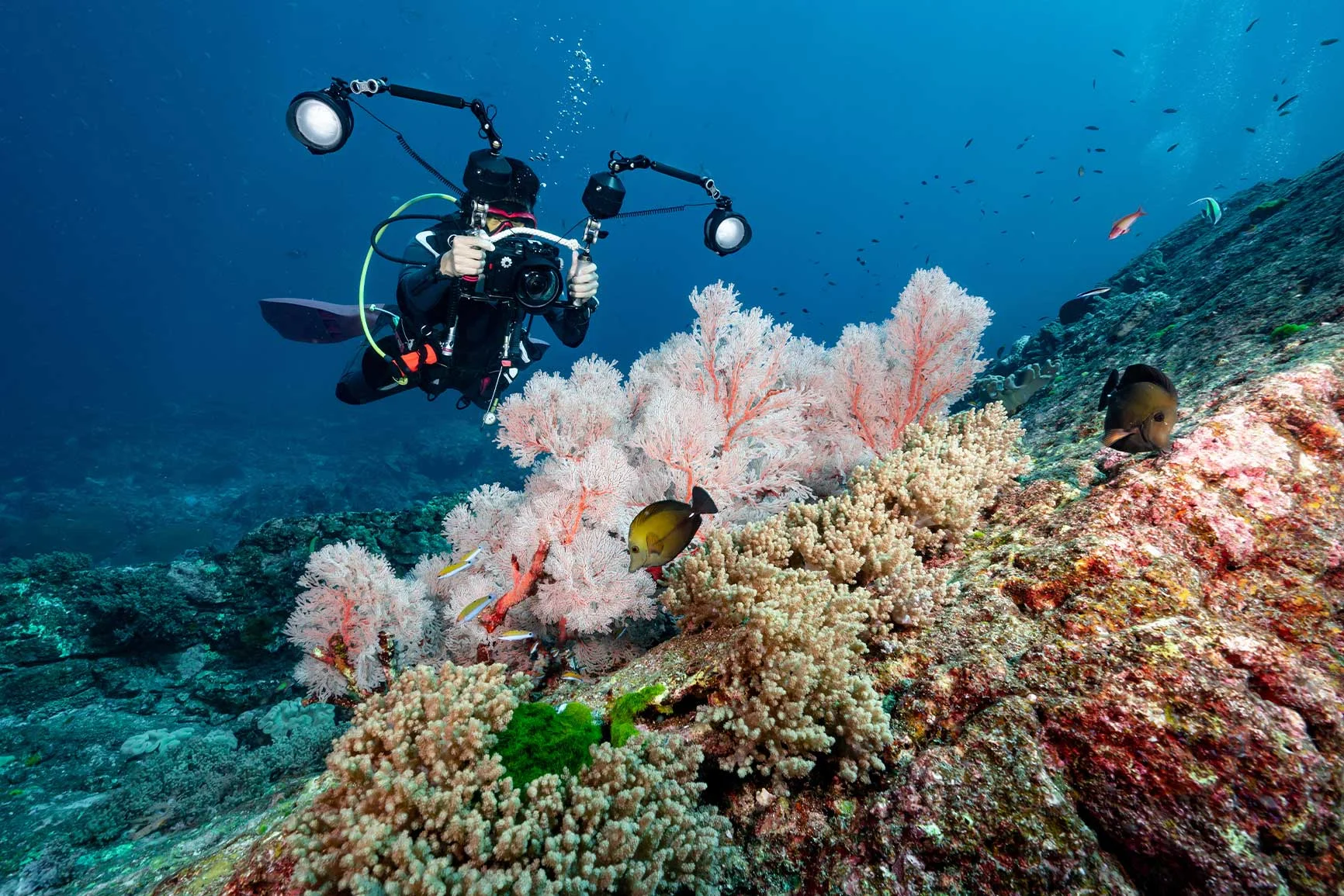
Since light quickly loses intensity and color underwater, additional lighting is often necessary. Underwater strobes and video lights help bring colors back to life and highlight details. Lighting equipment should be waterproof and powerful enough to ensure sufficient brightness even at greater depths. While there are simple underwater housings large enough to accommodate, for example, a clip-on flash on the camera, anyone who wants to use a flash underwater—and especially those who want to dive deeper—should opt for specialized underwater flash units.
Safety Tips for Underwater Photography
Safety should always be the top priority in underwater photography. Regular inspection and maintenance of diving equipment is essential. Well-maintained equipment significantly reduces the risk of accidents. Additionally, dives should be planned carefully, and you should never dive alone. A dive buddy can be vital in an emergency.
It is important to be in good physical condition, as diving involves physical exertion. Especially if you want to dive deeper, you should have mastered the basics of diving well enough to handle your camera equipment safely. Diving rules should always be followed. You should also be mindful of your personal limits regarding depth and dive duration.
An important safety measure is to constantly observe your surroundings. You should avoid provoking dangerous animals or diving in potentially hazardous areas.
What should you keep in mind before the dive?
Before every dive, you must ensure that your diving and camera equipment is in perfect condition. This includes checking the waterproofing of the underwater housing and the functionality of the camera and lighting. It is recommended to take some test shots with the camera equipment at home first to get used to handling the underwater housing. Since macro shots, in particular, with their shallow depth of field ( ), present a challenge, it can be helpful to practice such shots in advance so you can react immediately underwater later on.
It is helpful to familiarize yourself with the dive site and its conditions. Water temperature, current, and visibility can all affect underwater photography. Before the dive, you should discuss the dive plan with your dive partner or dive guide and establish hand signals for communication underwater.
How do you best capture colors underwater?
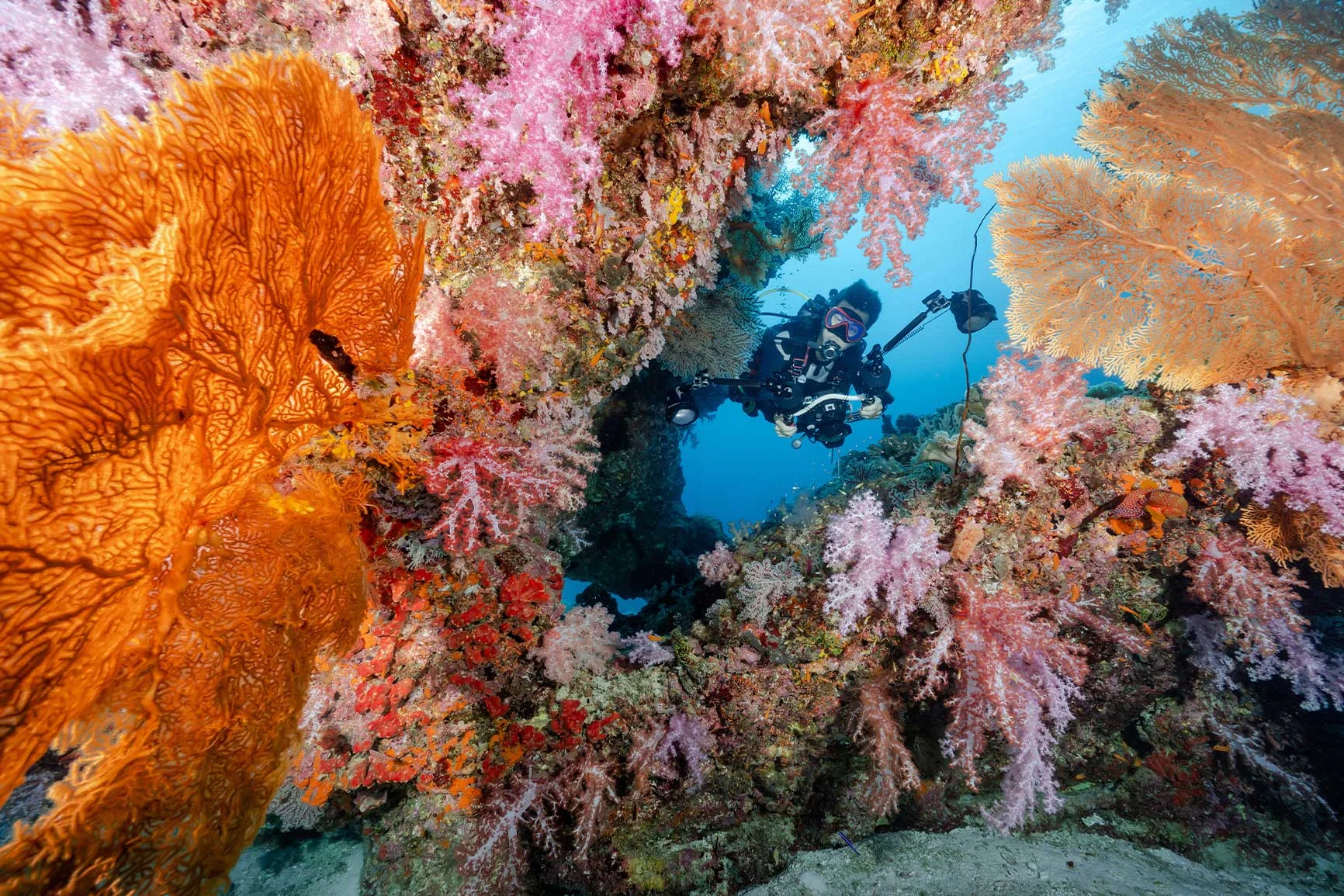
Underwater, colors lose their intensity due to the absorption of light. The deeper you dive, the more colors are lost in the photos. After just a few meters, red disappears first, then orange, and finally yellow. Shades of green persist longer, and at around 60 meters, everything is just blue. There is a physical reason for this: sunlight is refracted when it hits the water’s surface. Short wavelengths, such as the wavelength of red, are absorbed more quickly than long wavelengths. To preserve colors underwater, it is important to use artificial light such as underwater strobes and video lights. When light hits an object, its color is also reflected. With additional light, the colors can thus be brought back to life.
Post-processing the photos also plays an important role. With image editing software, colors can be adjusted and corrected. In addition to the white balance slider, the hue and saturation sliders also help enhance colors and make images pop. With WhiteWall wall art behind acrylic glass, the colors of the ocean can be perfectly showcased.
More information about photos behind acrylic glass
Recommended camera settings
Camera settings depend on the specific shooting situation. Generally, it’s helpful if the camera has a manual mode (“M”) so you can adjust the exposure manually. It’s also recommended to shoot in RAW mode, if your camera supports it. This makes it much easier to adjust colors, contrast, and white balance during post-processing. Nevertheless, it makes sense to set the white balance as early as possible during the shoot . Some cameras even offer a special white balance mode for underwater photography.
For exposure, a fast shutter speed is recommended to avoid blurry images. In many cases, for example, 1/125 to 1/250 second is a good choice. However, with very fast-moving underwater subjects, it may be necessary to shorten the shutter speed even further. Keep in mind that as shutter speeds get faster, the image becomes darker. Opening the aperture helps here. In underwater macro photography, you often shoot with wide apertures because you’re so close that otherwise not enough light reaches the sensor. If underwater strobes or continuous lights are used, the shutter speed and aperture can be adjusted accordingly. For wide-angle shots, you can sometimes close the aperture further since more light is captured overall. Of course, you can also increase the ISO sensitivity to boost the brightness in the images, for example, to shorten the shutter speed. Depending on the camera, however, this can quickly lead to image noise. Therefore, it is recommended to bring additional lighting with you on deeper dives, if possible.
Tips for photographing underwater life
Photographing underwater creatures requires patience, skill, and respect for nature. It’s best to move slowly and quietly so as not to startle the animals. Additionally, rapid movements can stir up particles that make photography more difficult. Underwater photos of animals look best when taken at eye level. The eyes are often the focal point of a photo and lend the image expression and vitality.
The camera’s continuous shooting mode increases your chances of capturing a beautiful moment. Experimenting with different perspectives and framing creates creative and unique images.
How do you find interesting creatures underwater?
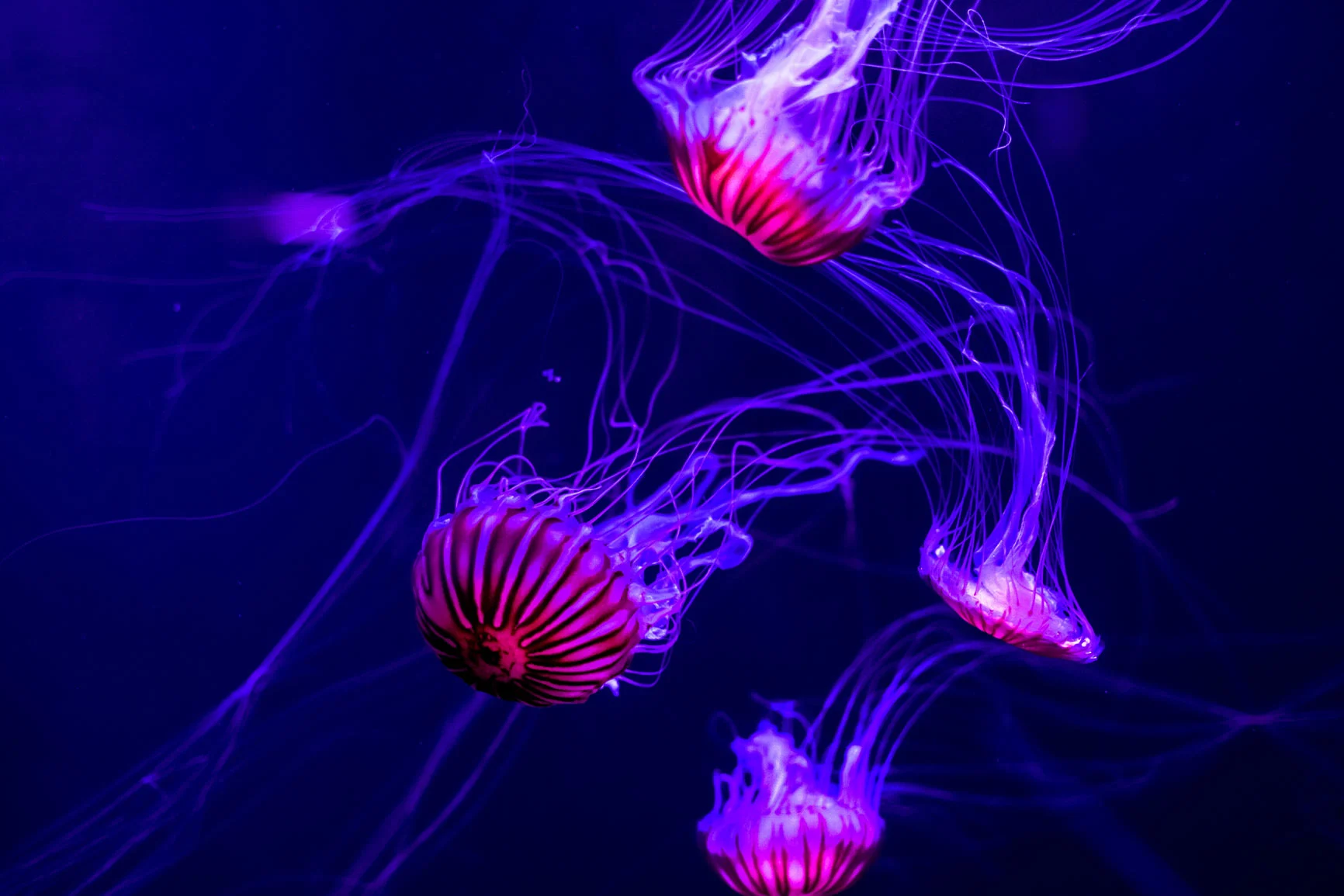
An experienced guide is often invaluable for finding fascinating underwater creatures. Guides know the best dive sites and where specific animals are likely to be found. They can help you discover rare and interesting creatures that you might otherwise miss on your own.
It’s helpful to research the marine life of the dive site beforehand. Which species live there, and during which season are they most active? Thorough research helps you search specifically for certain animals and increases your chances of interesting encounters.
Many animals stay well hidden and are hard to spot. That’s why it’s important to observe your surroundings closely and watch for small movements and unusual shapes in the water. Often, it’s the small details that point to exciting animals.
Extraordinary animals are particularly well showcased in our framed wall art.
More information about framed photos
5 Tips for Beginners in Underwater Photography
1. Practice Makes Perfect
Beginners are best off starting with simple dives and practicing underwater photography under various conditions. It’s a good idea to try out different camera settings beforehand and familiarize yourself with the operating procedures.
2. Less is more
You shouldn’t burden yourself with too much gear. Beginners can start with a compact camera, for example. Often, a simple camera with a good underwater housing and flash is enough to take great pictures. In the beginning, it’s more important to focus on the basics. Once you’ve discovered the joy of underwater photography, you can gradually expand your gear. Because there’s one thing you mustn’t forget: professional cameras, specialized underwater housings, and accessories like waterproof underwater flashes can quickly become very expensive.
3. Be patient
Underwater photography requires patience. It may well take many attempts before you capture your first good images. If you learn from your mistakes, you’ll keep improving.
4. Safety First
Your own safety and that of your dive partner come first. It’s important not to overestimate your abilities and to follow diving rules. A safe environment is the foundation for successful underwater photos.
5. Respect for nature
Whether you’re a beginner or a pro, the underwater world should always be treated with respect. It’s important not to touch or disturb the animals. The environment should also not be harmed. Sustainable photography helps preserve the beauty of the oceans.
Conclusion
Underwater photography offers fascinating insights into a hidden world full of colors and creatures. With the right equipment, careful preparation, and a respectful approach to nature, impressive images can be created. With a WhiteWall Coffee Table Book, the stories from the depths of the ocean can be told in a striking way.
Learn more about the author
Jan-Ole Schmidt (better known simply as Ole) is from northern Germany and has been with WhiteWall for many years. As a team leader in product management, he brings extensive experience in the photography industry. He taught himself photography and has built up in-depth expertise in image production, papers, laminations, and framing.
His strength lies in the combination of technical expertise and customer perspective - from file upload to framing in the WhiteWall configurator. Ole has held workshops, been a guest on podcasts and is in close contact with the photography community. He lives, works and photographs in Cologne.

WhiteWall Product Recommendations


We’re Happy To Help
Stores Need assistance?Our team will help you select the perfect products!Discover Now
Customer Service Feel free to call us at +44 20 34 11 18 46 or send us an email at info@whitewall.com.Digital appointment
Gift Certificates The Right Photo GiftDiscover Now
