Microphotography: Discover Tiny Worlds
By WhiteWall expert Jan-Ole Schmidt
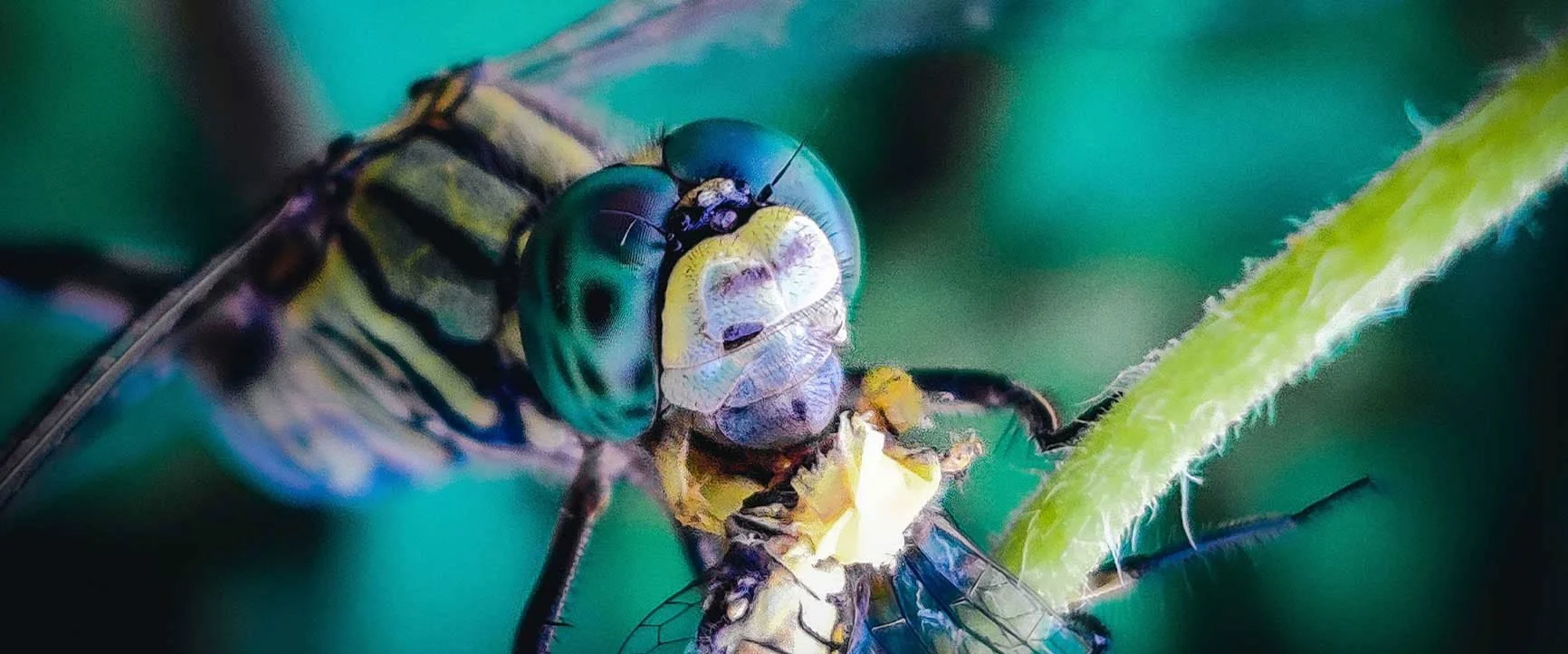
Microphotography offers fascinating insights into details that are invisible to the naked eye. While macro photography often works on a 1:1 scale, microphotography goes a step further and enables magnifications that reveal the finest structures, patterns, and textures. This photographic discipline requires not only specialized equipment but also a deep technical understanding and creative approaches to reveal the hidden beauty of small objects. This article highlights the most important aspects of microphotography and demonstrates how this technique can be applied in various fields.
The Ideal Equipment for Microphotography
Choosing a Camera
The choice of camera has a decisive influence on image quality. Mirrorless system cameras (DSLM) and digital single-lens reflex cameras (DSLR) offer the best conditions for photographing microscopic subjects, as they can work with various specialized lenses. In particular, cameras with very high-resolution full-frame sensors ranging from 45 to 60 megapixels enable an enormous level of detail while maintaining good image quality even at higher ISO sensitivities. The latter is especially helpful when highly magnified subjects in the microscopic range cannot be optimally illuminated.
However, a full-frame sensor isn’t strictly necessary. Even though full-frame captures more light and thus enables lower-noise images, smaller APS-C and Four Thirds sensors also offer a useful advantage. Due to the crop factor, APS-C and Four Thirds sensors achieve a higher magnification than full-frame sensors at the same focal length. For extreme magnifications, such as those required in microphotography, an APS-C or Four Thirds sensor can thus effectively extend the reach of a macro lens.
Specialized Lenses for Microphotography
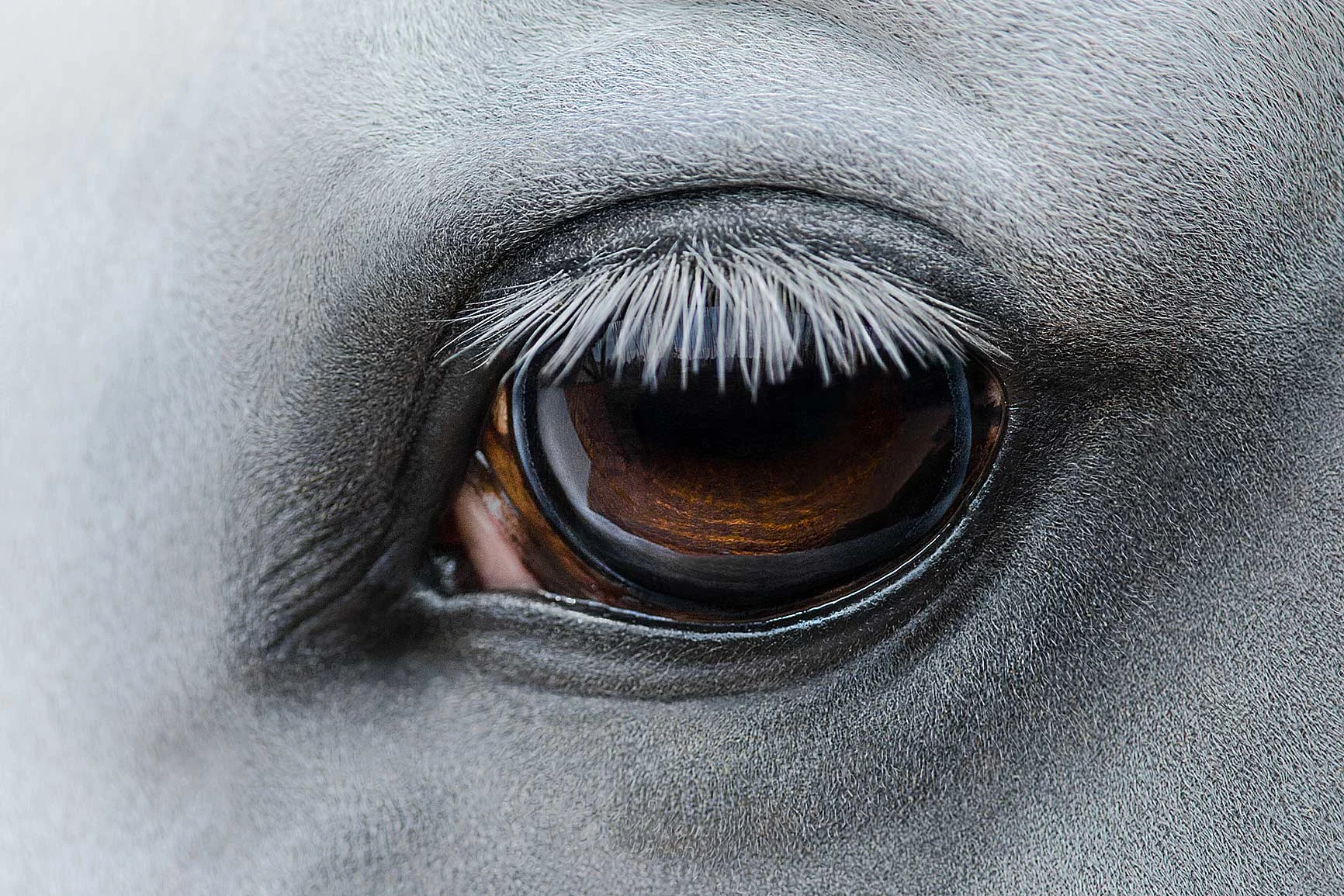
For magnifications exceeding a 1:1 scale, standard macro lenses are no longer sufficient. This is where special lenses designed for extreme magnifications come into play. Among the better-known lenses in this category is the Canon MP-E 65mm f/2.8 1-5x macro lens, which enables high magnifications of up to 5x—that is, a reproduction ratio of 5:1—ideal for photographing extreme details such as the structure of an insect’s eye or the surface of an ice crystal.
Laowa, a manufacturer specializing in macro and microphotography, also offers a range of lenses specifically designed for extreme magnifications. The Laowa 25mm f/2.8 Ultra Macro 2.5-5x also enables magnifications of up to 5:1 and is available for both full-frame and APS-C mirrorless cameras with Canon EF, Canon RF, Nikon F, Nikon Z, Pentax K, L-Mount, and Sony E- s. For extreme applications, Laowa also offers the Aurogon FF 10-50x Supermicro APO, which was specifically developed for microscope photography with full-frame cameras and enables magnifications of up to 50x—perfect for scientific and technical applications where the highest precision is required. The Aurogon FF 10-50x Supermicro APO is a set consisting of four different tube lenses for various magnifications and a front lens, which are connected together to the camera.
Important to know: Specialized lenses for extreme magnifications in the micro range are typically focused manually only. It is therefore common for such lenses not to have autofocus.
Accessories for Higher Magnification
In addition to special lenses, there are a number of accessories that enable higher magnification. Extension rings and bellows are tools that increase the distance between the lens and the sensor, thereby increasing the magnification factor. Bellows, in particular, allow for fine control of the magnification factor, but due to their more cumbersome handling, they are better suited for static shots in the studio.
Product Tip: Sharp and detailed microphotographs are particularly well presented on a WhiteWall print. The high level of detail and clarity of this printing process ensures that even the finest structures and patterns remain visible.
More information about Photo Prints
Light and Lighting in Microphotography
Lighting plays a crucial role in microphotography, as special lenses often require getting so close to the subject that the lens barrel itself blocks some of the light. Some special lenses feature a built-in LED ring light on the front element. If this is not the case, a small LED continuous light with adjustable brightness is recommended. Flash units are generally too bright for microphotography and cannot be reduced in power sufficiently. Therefore, a flash would result in overexposed images given the often very short distances to the subject. With dimmable LED lights, the lighting can be adjusted more effectively and, thanks to constant continuous illumination, can also be checked and assessed before taking the shot.
A ring light mounted directly on the lens ensures even illumination from the front and prevents harsh shadows from obscuring details. Alternatively, side light sources can be used to highlight certain structures more strongly and give the subject more depth.
Diffusers and barn doors are also useful for controlling the light. A diffuser produces soft, diffused light that softens shadows and harmonizes contrasts in the image. Barn doors prevent individual light rays from hitting reflective surfaces directly and creating distracting reflections.
Focus and Depth of Field at Extreme Magnifications
The challenge of shallow depth of field
The greater the magnification, the shallower the depth of field. In extreme close-ups, it is often difficult to capture the entire subject in focus, as only a small area is in focus. A minimal distance between the lens and the subject reduces the depth of field to fractions of a millimeter.
Focus stacking technique
To address this problem, the focus stacking technique is used. This involves taking multiple shots with different focus points, which are later combined into a single image during post-processing. The result is an image in which all relevant areas of the subject are in focus, even though the depth of field of the individual shots is very shallow. Programs such as Helicon Focus or Adobe Photoshop offer special features that facilitate focus stacking.

Manual Focusing
Since focusing is usually done manually in macro and microphotography, a certain amount of practice is required. Often, the depth of field at extremely close range is only a few millimeters. Depending on the lens, it can be difficult in such cases to precisely adjust the focus manually on the lens. If you don’t want to turn the focus ring on the lens, you can alternatively use a macro slide. This is mounted between the tripod and the camera and uses a screw to adjust the distance of the entire camera-lens combination from the subject.
Image Composition and Creative Approaches
Composition in Microphotography
Classic composition rules such as the rule of thirds or the golden ratio also apply in microphotography. These principles help create a harmonious image and direct the viewer’s gaze to the essentials. In extreme close-ups, however, the primary goal is often to bring abstract details and patterns into focus.
Creative Effects Through Extreme Close-Ups
In microphotography, what appears unremarkable at normal scale can become a work of art. The structure of a flower, the surface of a mineral, or the geometric arrangement of insect eyes can become fascinating images when viewed at extreme magnification. These abstractions offer a new perspective on everyday objects and reveal microscopic worlds as artistic subjects.
Challenges and Solutions
Avoiding Vibrations and Camera Shake
Since even the slightest movements can ruin the image, it is important to minimize vibrations. A sturdy tripod is essential to prevent shaking. Additionally, a remote shutter release or the camera’s self-timer should be used to ensure the camera does not move when the shutter is released. With DSLR cameras, mirror lock-up can be activated to prevent vibrations caused by the mirror flipping up. With mirrorless system cameras, this final step is not necessary. Modern system cameras also offer the option of using an electronic shutter. In this case, no mechanical shutter curtain is moved; instead, the sensor is read electronically. This enables silent shooting and prevents camera shake, as no mechanical parts inside the camera need to move.
Shutter Speed and ISO
When using extreme magnifications, longer exposure times are often necessary because you are so close to the subject that very little light reaches the sensor. To achieve a low-noise image, you should use the lowest possible ISO settings. In low-light conditions, this is usually only possible when using a tripod and long exposure times. However, long exposure times require that the subject remain as still as possible. Consequently, this only works with a static subject or an insect that remains motionless for an extended period. Otherwise, the ISO sensitivity must be increased to shorten the shutter speed. In such situations, full-frame sensors are advantageous.
Applications of Microphotography
Nature and Science
In nature photography, microphotography offers fascinating insights into the world of insects, plants, and microorganisms. Details of plant cells or the structure of a wing can be impressively captured at high magnification. Microphotography is also used in science to document biological samples or microscopic structures.
Artistic Microphotography
Outside of science, microphotography is also used as an art form. Whether fabric textures, material surfaces, or crystal structures—the extreme magnification creates abstract works of art that captivate the viewer. Microphotography offers endless possibilities for viewing everyday objects from a completely new perspective.
Product Tip: Photo prints mounted behind acrylic glass from WhiteWall are ideal for presenting microphotographs. The acrylic glass enhances the brilliance and depth of the colors and makes microscopic details appear particularly vivid.
More information about photos behind acrylic glass
Conclusion
Microphotography opens up a fascinating world of small details and structures that are invisible to the naked eye. It requires specialized equipment, precise lighting, and specific techniques such as focus stacking to produce sharp and detailed images. Whether in science, nature photography, or art—the possibilities of microphotography are diverse and offer exciting challenges for photographers who wish to explore the world of the tiny.
Presentation tip: Microphotographs are particularly striking when displayed on high-quality materials. A Photo Print or an acrylic glass print perfectly highlights even the finest details and allows these tiny worlds to shine in all their brilliance. Photo Prints behind acrylic glass are also available in geometric shapes with 6–12 sides or as circles.
Learn more about the author
Jan-Ole Schmidt (better known simply as Ole) is from northern Germany and has been with WhiteWall for many years. As a team leader in product management, he brings extensive experience in the photography industry. He taught himself photography and has built up in-depth expertise in image production, papers, laminations, and framing.
His strength lies in the combination of technical expertise and customer perspective - from file upload to framing in the WhiteWall configurator. Ole has held workshops, been a guest on podcasts and is in close contact with the photography community. He lives, works and photographs in Cologne.

WhiteWall Product Recommendations


We’re Happy To Help
Stores Need assistance?Our team will help you select the perfect products!Discover Now
Customer Service Feel free to call us at +1 646 513 44 22 or send us an email at info@whitewall.com.Digital appointment
Gift Certificates The Right Photo GiftDiscover Now
