The Artist’s Perspective: From the Photographic Gaze to the Finished Work of Art
How are images created that resonate far beyond a single moment? With “The Artist’s Perspective”, WhiteWall offers direct insight into the creative processes of international artists—and shows how a subject evolves into a work of art: from the initial on-location observation to the final presentation as a high-quality wall art piece or photographic product.
Every photographer brings their own visual language to the table—a unique perspective on landscape, architecture, and atmosphere. The focus is not on familiar views of a place, but on personal perspectives, deliberately chosen vantage points, and the decisions behind the image: light, timing, composition, and materiality.
This magazine feature is continuously expanded with new artistic perspectives and, in upcoming chapters, opens up further insights into photographic approaches and visual worlds.
Alex Burke – Colorado & Kansas, USA
Alex Burke photographs the American prairie with a distinctly minimalist approach. Across the vast plains of Colorado and the rolling grasslands of the Flint Hills, apparent emptiness becomes a compositional principle: individual trees, structures, and rock formations create visual accents, while light and weather continually transform the landscape.
For The Artist’s Perspective, Burke shares two regions that have shaped his photographic vision. His large-format film photographs capture the vastness, solitude, and subtle changes of the landscape – from wildflower-filled spring fields to frost-covered winter mornings.
01 — Colorado Prairie
The Power of Vastness
Colorado’s prairie is defined by its apparent emptiness. Expansive plains, distinctive rock formations, and an almost limitless horizon create clean, minimalist compositions. The Pawnee Buttes, in particular, provide a striking visual contrast against the open landscape.
“The prairie has some of the best sunrises, with clouds that light up in vibrant pinks and reds.”
Our product recommendation: A photo print on Alu-Dibond brings out the rich colors, subtle tonal nuances, and clean compositions of Burke’s prairie landscapes. Its understated, matte surface complements the minimalist character of the scenery while giving the images a refined, contemporary presence.

02 — Flint Hills
A Landscape Tells Its Story
Burke has photographed the Flint Hills over many years, capturing their changing character: lush green grasses in spring, dramatic storms, and atmospheric light at sunrise and sunset. He sees his photographs not as individual images, but as interconnected stories told through color, light, and the changing seasons.
Our product recommendation: A premium Coffee Table Book provides a natural framework for such photographic series. Individually designed and produced with high-quality branded papers, it brings individual photographs together as a cohesive visual work.

03 — Flint Hills
Nature in All Its Depth
The gently rolling landscape of the Flint Hills is defined by solitude, openness, and subtle contrasts. Lone trees, pale flint stones, and historic structures create deliberate accents across the open prairie. In Schoolhouse Storm Sunset, this restrained visual language is contrasted by a dramatic sky glowing with color.
“The landscape is minimal, flat, and at the surface appearing almost empty. This means that any object really stands out to make a powerful and clean composition.”
Our product recommendation: A photo print behind matte acrylic glass preserves the natural character of the image while minimizing distracting reflections. Combined with the custom-made Hamburg frame, it creates a refined presentation that emphasizes the calm and spaciousness of the landscape, even at large formats.

Alex Burke
Alex Burke lives in Colorado and has spent many years photographing the landscapes of the American West with a large-format film camera. His road trips, often lasting several days, take him deep into the wilderness, where he waits for the perfect interplay of light, weather, and landscape.
Alongside his artistic work, he shares his knowledge through successful e-books and his own photography blog. For “The Artist’s Perspective,” Alex Burke offers his perspective on the North American landscape and shares insider tips for a photographic journey through the prairie.

VuThéara Kham – Paris, France
Geometry. Contrast. Perspective. Paris is known for its iconic landmarks, but VuThéara Kham looks beyond the familiar. His photography transforms the city into a study of geometry, light, and visual rhythm, where architecture, reflections, and everyday movement become graphic compositions.
For The Artist’s Perspective, VuThéara shares two neighborhoods that reveal a different side of Paris: the contemporary architecture of La Défense and the striking contrasts between Beaubourg and Le Marais. Together, they demonstrate how thoughtful framing and changing light can turn ordinary urban scenes into compelling photographic narratives.
“It’s not just about what you see, but how you choose to frame it.”
The following locations explore Paris through two distinct perspectives: the clean lines and abstraction of modern architecture, and the dynamic interplay of history, culture, and city life. Together, they show how photography can transform familiar places into entirely new visual experiences.
01 — Paris La Défense
Architecture as Graphic Composition
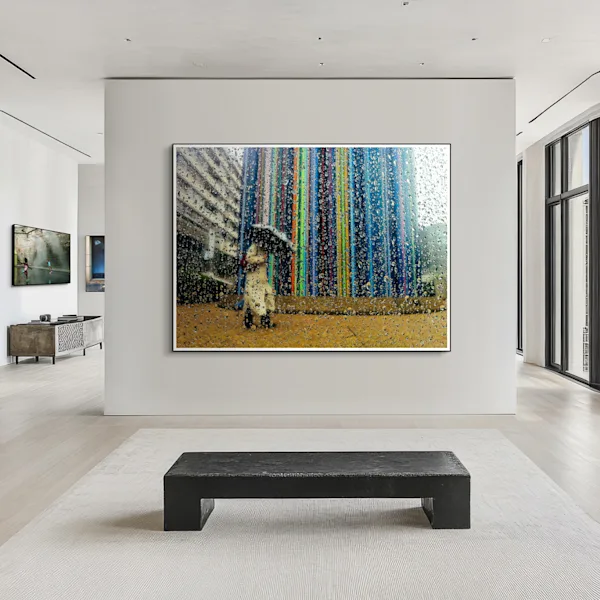
La Défense reveals a different side of Paris. Its bold architecture, geometric forms, and shifting light create an ideal setting for minimalist and experimental photography.
“It’s rarely thought of as a tourist spot, yet it’s incredibly rich visually. At La Défense, it’s not just about what you see, but how you choose to frame it.”
Our product recommendation: Brilliant prints behind acrylic glass or the ArtBox Aluminium emphasize the crisp lines, strong contrasts, and vibrant colors of these architectural compositions.
02 — Beaubourg & Le Marais
Where Architecture Meets Everyday Life
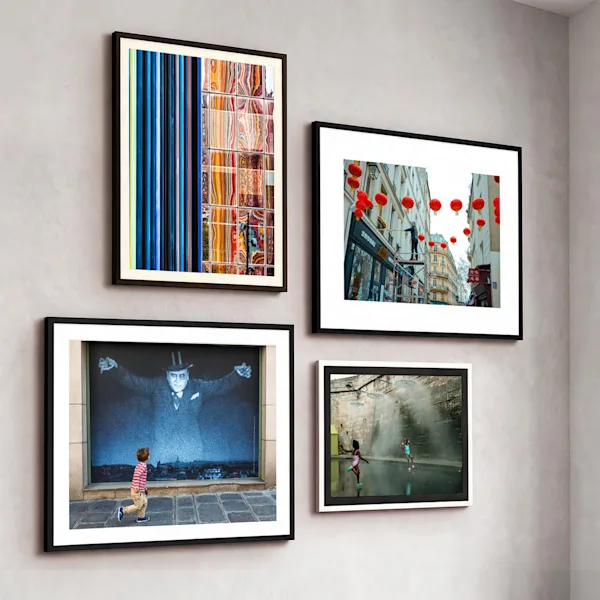
Around the Centre Pompidou and Le Marais, contemporary architecture meets historic streets and vibrant city life. The visual tension between structure and spontaneity gives every scene a cinematic quality.
“There’s a fascinating visual tension between the radical architecture of the Centre Pompidou and the surrounding neighborhood. Every moment feels graphic, almost cinematic.”
Our product recommendation: Create a dynamic gallery wall with interchangeable magnetic frames or present a curated series as a premium Coffee Table Book.
VuThéara Kham
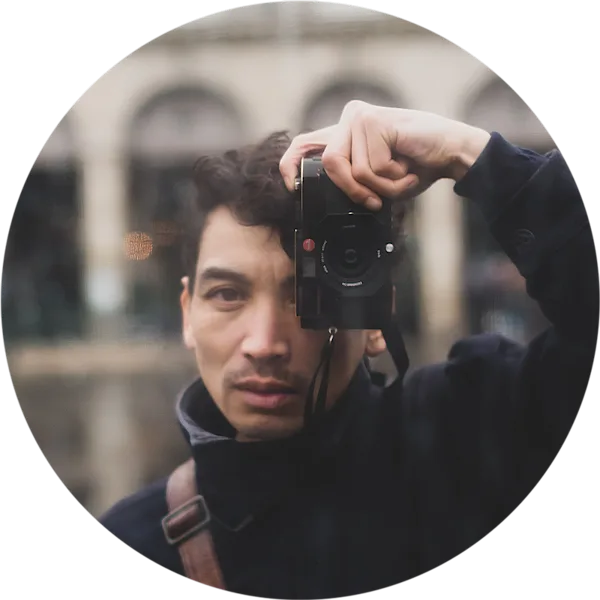
VuThéara Kham is a French photographer of Cambodian descent based in Paris. His photographic journey began in 2010 with street photography, captured using a secondhand smartphone. Today, he focuses on urban spaces, fleeting encounters, and architectural structures. His work combines documentary photography with an artistic sensitivity for light, movement, and atmosphere.
For “The Artist’s Perspective,” he offers insight into his photographic process and reveals his “Hidden Spots” – his favorite lesser-known places in Paris.
Ava Pivot – Lake Como in Italy
Depth. Tranquility. Light. Lake Como is one of the most photographed landscapes in Europe. Ava Pivot deliberately chose a different approach. Instead of iconic postcard motifs, she turns her gaze to places that leave room for interpretation: quiet high ground, hidden shorelines, and landscapes where light and atmosphere become the true protagonists. This is how her series around Bellagio came to life—defined by minimalism, subtle tonal variations, and a calm, almost meditative visual language.
“When you take your time, set out early, and work intentionally with light, you don’t just take photos—you create images with a story of their own.”
The following locations present Lake Como from three distinct perspectives: vastness, intimacy, and movement. Together, they reveal the complexity of a landscape—and how a single motif can develop into a distinctive photographic signature.
01 — Monte San Primo
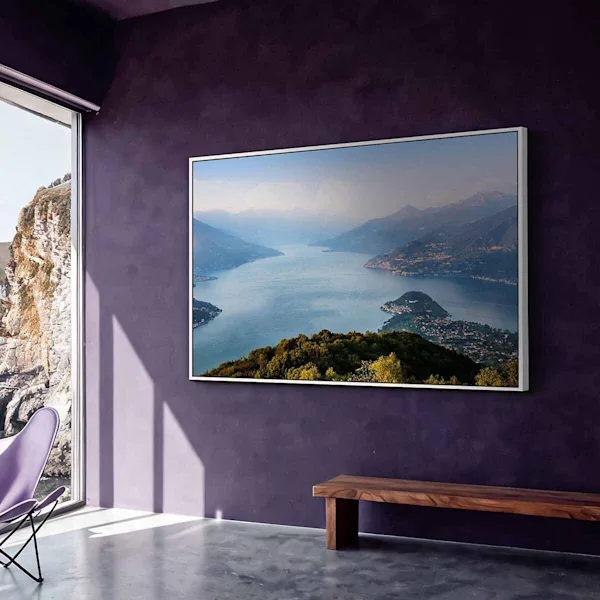
The Landscape as a Natural Composition
Above Bellagio, Monte San Primo offers a view of Lake Como’s distinctive shape—vast, clear, and surprisingly calm. “I deliberately left Bellagio to gain distance. What immediately fascinated me was this combination of vastness and tranquility. Photographically, something emerges here that requires almost no staging.”
Our product recommendation: The subtle transitions and calmness of the motifs are particularly effective on high-quality Fine Art papers. Understated framing with a shadow gap further enhances the sense of spatial depth.
02 — San Giovanni
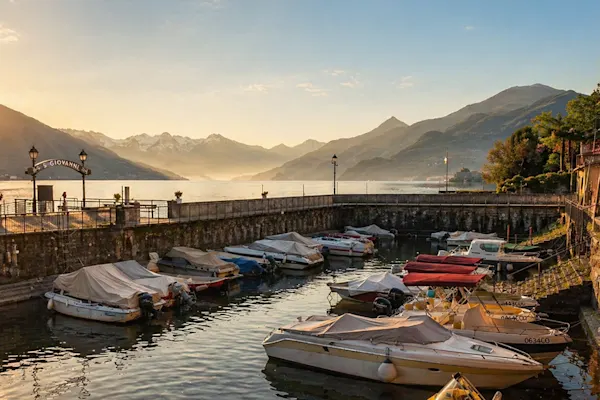
Intimacy Instead of Panorama
Just a few minutes from Bellagio, the visual language changes completely. San Giovanni thrives not on vastness, but on detail: narrow alleys, reflections on the water, gentle movement, and an atmosphere that reveals itself only over time. “San Giovanni feels like a place you don’t go looking for—but that finds you.” Here, the result is not classic landscape imagery, but intimate compositions defined by closeness and mood.
Our product recommendation: For these calm, detail-rich motifs, Fine Art Prints in a matching mat frame are ideal for an understated presentation.
03 — Orrido di Nesso
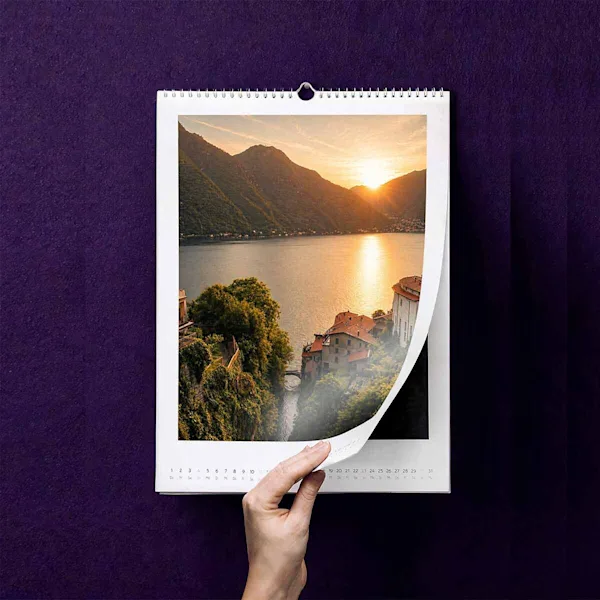
Making Movement Visible
With the Orrido di Nesso, the character of the series shifts once again. Between rock, water, and the historic stone bridge, a place full of dynamism unfolds—as a deliberate contrast to the lake’s serene expanses. “After all that calm, I wanted movement and structure. That’s exactly what you find here.” Here, Ava deliberately uses long exposure times to transform water into flowing, almost abstract forms.
Our product recommendation: The subtle nuances between movement and structure gain particular presence and depth in large-format wall art or photo calendars.
Ava Pivot
Ava Pivot works internationally across Milan, Zurich, and New York. Her visual language is defined by calmness, clarity, and a sensitive use of light. Her work is regularly featured in renowned publications such as Vogue, ELLE, and GQ.
For “The Artist’s Perspective,” she photographed exclusively for WhiteWall at Lake Como, documenting three of her personal hidden spots. In this feature, she shares her experiences, perspectives, and photographic approaches.